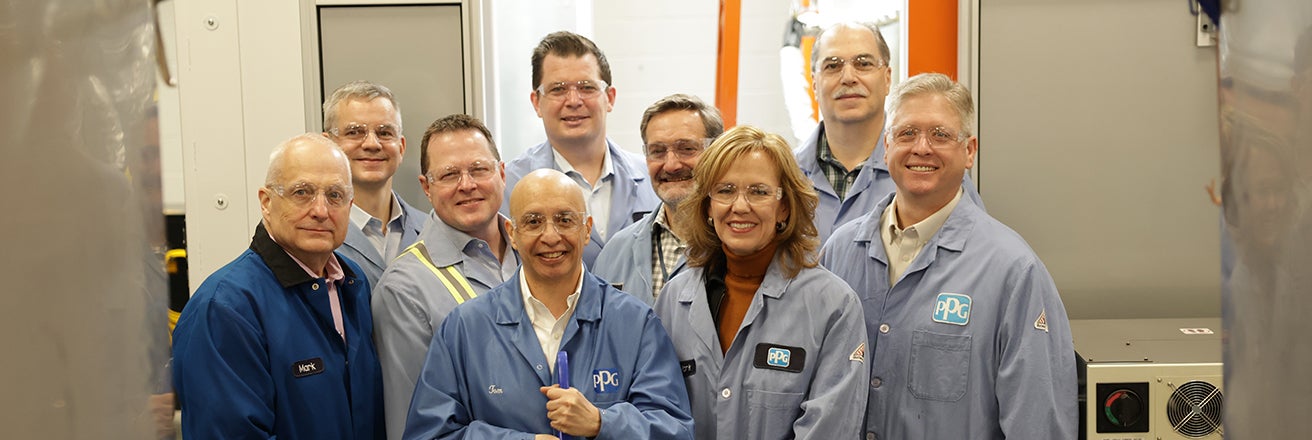
PPG worked closely with a major automotive manufacturer to develop an innovative flax-based composite that could replace traditional carbon fiber parts in vehicles. Our team adapted PPG's standard multilayer coating system for carbon fiber components to perform on a natural flax fiber substrate, creating a coating stack that delivers a premium surface while meeting the original equipment manufacturer’s (OEM) stringent performance and aesthetic requirements for series production.
Through this collaboration, PPG supplied a tailored multilayer-coatings system, including tinted clear coats, engineered to provide durability, color styling and a high-end finish for the natural fiber composite. The partnership shows how natural fiber materials, supported by advanced coatings, can help automakers pursue ambitious sustainability targets without compromising on quality, design or performance.
Flame resistant coatings for electric and hydrogen-powered vehicles
PPG is collaborating with the National Center for Manufacturing Sciences (NCMS) to develop advanced flame-resistant coatings that improve the safety of electric and hydrogen-powered vehicles. We are focusing on more sustainable, next-generation coating systems with excellent fire resistance performance while supporting the shift to lower-emission mobility.
Through this partnership we are developing innovative intumescent coating technologies that provide critical safety protection for electric vehicle battery systems. The coatings deliver enhanced performance for hydrogen-powered vehicles, including reliability at extreme temperatures. This work underscores PPG's commitment to supporting the transition to cleaner transportation technologies while prioritizing safety and environmental responsibility.
Enhanced coatings for HVAC systems
PPG is partnering with the National Lab of the Rockies (NLR) and other organizations to develop next-generation coatings designed for heat exchanger applications in HVAC systems. These coatings are engineered to promote rapid condensate removal from heat exchanger surfaces, improving the efficiency of the cooling system. This technology could open a significant new growth opportunity for PPG as most heat exchangers currently operate without protective coatings.
Through this collaboration, PPG researchers have created prototype coatings that maintain their properties even after exposure to common coil cleaner solutions, helping ensure long-term performance in demanding operating environments. Industry guidance defines the specific performance characteristics required in commercial HVAC equipment, while the NLR supplies detailed performance data from a custom test device that measures heat exchange efficiency under a wide range of temperature and humidity conditions.
Laser-based technology for curing coatings