
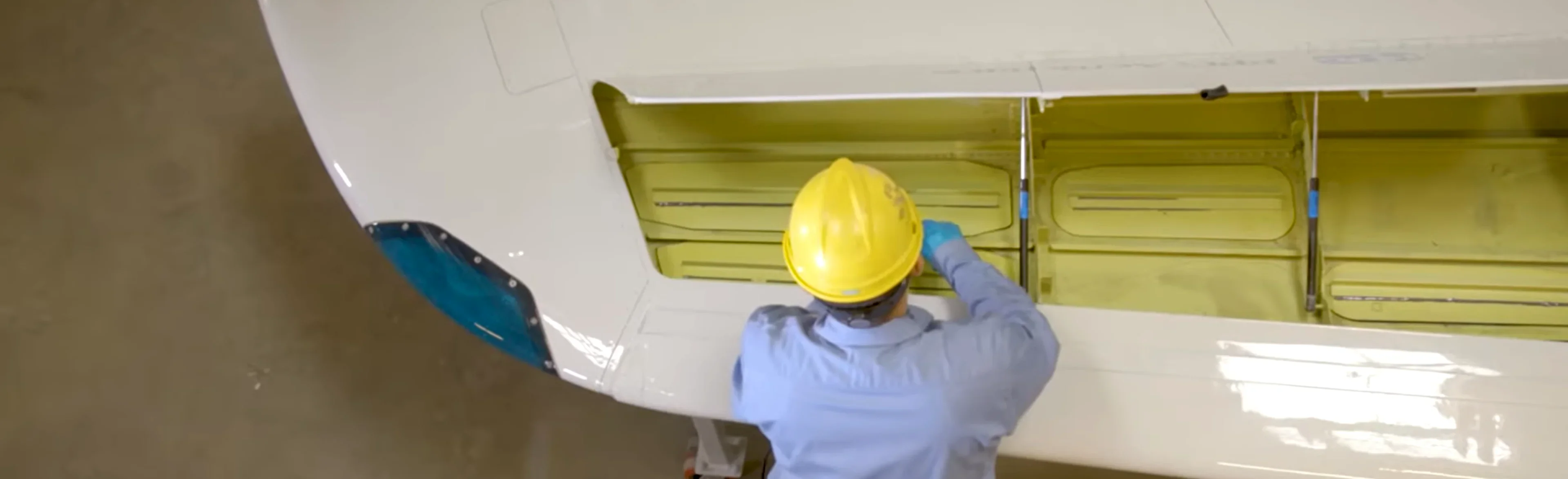
In aerospace fuel system maintenance and repair, the selection of an appropriate fuel tank sealant is critical to ensuring leak prevention and long-term durability under demanding operational conditions. Aerospace engineers and MRO professionals must evaluate multiple technical parameters to identify a fuel tank sealant that meets stringent performance requirements for fuel resistance, thermal stability, substrate compatibility and application constraints.
Critical Performance Criteria for Aerospace Fuel Tank Sealants
Aerospace fuel tanks are exposed to aggressive chemical environments, including Jet A, JP-8 and avgas, which contain hydrocarbons and additives that can degrade non-compatible materials. Therefore, the chemical resistance of a fuel tank sealant to these fuels is paramount. Sealants must demonstrate adequate resistance to softening and minimal loss of mechanical properties after years of fuel exposure as verified through industry accepted fuel immersion and compatibility testing protocols.
Thermal performance is equally important. Fuel tanks experience wide temperature excursions, from approximately -65°F (-54 °C) at cruising altitudes to +200°F (+93 °C). Sealants must maintain elastomeric properties, adhesion strength and dimensional stability across this temperature range to prevent degradation caused by thermal cycling stresses.
Substrate compatibility is a key factor influencing sealant selection. Aerospace fuel tanks are commonly fabricated from aluminum alloys (e.g., 2024-T3, 7075-T6), titanium or advanced composites and the various surface treatments. Furthermore, the sealant’s microbial resistance should also be confirmed to avoid adverse interactions.
Overview of Common Aerospace Fuel Tank Sealant Chemistries
Polysulfide Sealants: Polysulfides are the industry standard for fuel tank sealing due to their excellent hydrocarbon resistance, flexibility and durability. Their sulfur-based polymer backbone provides chemical inertness with elongation capabilities often exceeding 300% to accommodate substrate movement without cracking. However, polysulfides typically require multi-day curing at ambient or elevated temperatures (e.g., 24-72 hours at 77 °F (25 °C) or accelerated curing at +140 to +176°F (+60 to +80°C)), which must be factored into maintenance schedules. Polysulfide sealants are often qualified to AMS-S-8802 (sealant, polysulfide, fuel tank and aircraft structures).
Epoxy‑cured polythioether sealants: Polythioethers represent an advanced class of fuel‑resistant materials designed to deliver the trusted performance characteristics of traditional polysulfides while extending capability in several key areas. Like polysulfides, they provide excellent hydrocarbon resistance, long‑term flexibility and strong adhesion to common aerospace substrates. Their thioether-based backbone enables a broader operational temperature range, performing reliably from -80 to +320 °F (-62 to +160 °C) without loss of elasticity or fuel resistance. These materials also offer faster cure profiles and reduced humidity sensitivity, supporting consistent tack‑free and cure times even when ambient conditions vary. This makes them well‑suited for flight‑line repair and maintenance environments where conditions may be less controlled. Qualified to AMS 3277, epoxy‑cured polythioethers offer a validated alternative to traditional polysulfides, combining improved handling characteristics with a wider temperature performance envelope for demanding aerospace applications.
Ensuring Chemical Compatibility and Avoiding Application Pitfalls
Aerospace engineers must rigorously verify sealant compatibility with the specific fuel formulations in use, including additives such as anti-icing agents, corrosion inhibitors and biocides, which can affect sealant performance. Reviewing manufacturer technical data sheets and conducting compatibility testing under simulated service conditions is recommended.
Proper Preparation
Across all chemistries, cleanliness of the work area remains a critical factor. Contaminants such as oils, dust or moisture (FOD) can interfere with adhesion and compromise seal integrity. Using proper surface preparation methods and maintaining a controlled workspace help ensure consistent results and minimize rework. Good manufacturing practices (including stable temperature conditions and adequate ventilation) support uniform application quality. Common application errors include inadequate surface preparation, improper mixing ratios and failure to maintain recommended curing environments. Use of proper cleaning cloths conforming to AMS 3819 is imperative. Use of unapproved cloths can compromise adhesion, leading to premature seal failure. Additionally, sealant shelf life and storage conditions must be managed to ensure proper performance.
Environmental and Operational Factors Impacting Sealant Performance
The conditions under which a fuel tank sealant is applied can significantly influence its handling, cure behavior and long‑term performance. Polysulfide sealants, for example, are highly sensitive to temperature and humidity during application. Warmer, more humid environments accelerate both tack‑free time and curing rate, while cooler, drier conditions slow these processes. This sensitivity requires careful planning to ensure the sealant reaches its intended cure profile and mechanical properties. Polythioether sealants, by comparison, exhibit reduced dependence on environmental conditions and maintain predictable cure behavior across a wider range of temperatures.
PPG’s Advanced Fuel Tank Sealants for Aerospace Applications
PPG’s portfolio includes industry-leading fuel tank sealants engineered to meet aerospace performance standards:
- PPG PR-1440® and PR-1422® Class B Aircraft Integral Fuel Tank Sealants: These polysulfide-based sealants provide excellent fuel resistance and flexibility, making them ideal for primary sealing of integral fuel tanks. They offer exceptional adhesion to aluminum and composite substrates and maintain performance across wide temperature ranges. They meet rigorous aerospace standards, including AMS-S-8802, and have been extensively tested for fuel immersion and thermal cycling durability.
| PR-1440® | PR-1422® |
- PR‑1776®, PR‑1776® M, PR‑1782® and PR‑2007 Lightweight Polysulfide Sealants: These lightweight polysulfide sealants are engineered to deliver performance equivalent to AMS‑S‑8802 while offering meaningful reductions in applied weight. These formulations maintain the fuel resistance, flexibility and adhesion characteristics expected of traditional polysulfide systems, providing dependable sealing performance for integral fuel tanks and aircraft structures. By reducing sealant density without compromising durability, these products help support aerospace platforms where weight optimization contributes to improved operational efficiency. Each material is qualified to applicable aerospace specifications and has been validated through fuel immersion, thermal cycling and long‑term durability testing.
| PR-1776® Class C | PR-1776® M Class B | PR-1782® Class A | PR-1782® Class B |
| PR-1782® Class C | PR-2007 Class B | PR-2007 Class C |
- PPG PR‑2001® and PR‑1826® Class B Rapid‑Curing Polythioether Sealants: Our advanced polythioether formulations are designed with maintenance and repair operations in mind, where reduced downtime is essential. Their rapid cure profiles allow faster return‑to‑service while maintaining the robust fuel resistance, elongation, and adhesion characteristics required for integral fuel tank applications. As AMS 3277‑qualified materials, these sealants meet stringent aerospace and military performance requirements. In addition to fast cure, they offer a broader operational temperature envelope than traditional polysulfide sealants, supporting reliable application and long‑term performance across diverse environmental conditions typical of MRO operations.
| PR-2001® Class A | PR-2001® Class B | PR-1826® Class A |
| PR-1826® Class B | PR-2001® LW Class B |
These sealants have been developed and qualified to meet Aerospace OEMs and military requirements, ensuring dependable performance in the challenging environments of aerospace fuel tanks.
Ensuring Aerospace Fuel Tank Integrity with Proper Sealant Selection
For aerospace engineers and MRO professionals, selecting the correct fuel tank sealant involves a comprehensive evaluation of chemical resistance, thermal stability, substrate adhesion and application parameters. Understanding the distinct properties of polysulfide, polyurethane and epoxy sealants enables informed decisions that enhance fuel tank integrity and operational safety. PPG’s specialized sealant products offer proven solutions tailored to the rigorous demands of aerospace fuel systems. Adhering to manufacturer guidelines and maintaining strict quality control during application are essential to achieving reliable, long-lasting seals.
Contact PPG for Trusted Fuel Tank Sealant Solutions
Selecting the right fuel tank sealant is vital for maintaining the safety and performance of aerospace fuel systems. For personalized guidance on choosing the optimal sealant for your specific application or to learn more about PPG’s advanced fuel tank sealant products, please contact our aerospace technical support team. Our team is ready to assist you with product information, technical data and application best practices to help ensure your fuel tank repairs and maintenance meet the highest industry standards.
Get in touch with PPG today to discuss your fuel tank sealing needs and discover how our solutions can support your mission-critical operations.