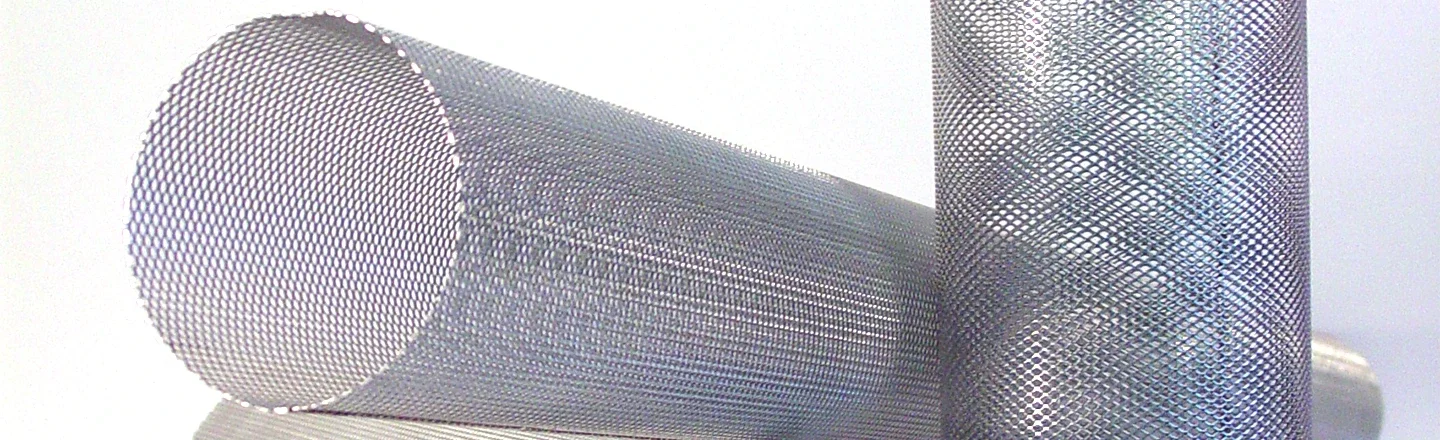
Expanded aluminum (also spelled aluminium outside the U.S.) is a lightweight metal material made by cutting and stretching a solid aluminum sheet into a uniform mesh. The result is a continuous structure that will not unravel, even when shaped, trimmed or placed under mechanical stress. This stability makes expanded aluminum dependable in demanding environments where predictable performance is essential. As industries prioritize lighter structures, improved conductivity and material efficiency, expanded aluminum provides a dependable solution that supports these evolving design requirements.
Because the mesh is formed from a single sheet, DEXMET® expanded materials can control its pattern, thickness and open area with precision. This helps engineers select the right combination of weight, strength, airflow and electrical behavior for their application. Engineers value its low weight, controlled open area and reliable electrical continuity—a combination that supports performance without adding complexity.
Key features at a glance
- Lightweight, high strength‑to‑weight ratio
- Stable, single‑unit structure (no welds, no woven joints)
- Consistent conductivity across the mesh
- Tunable open area to balance weight, airflow/resin flow and stiffness
How expanded aluminum is made
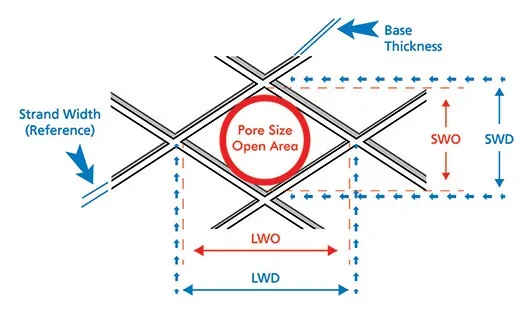
Expanded aluminum begins as a coil or flat sheet. During manufacturing, the sheet passes through an expansion tool that slits and stretches the metal in a single motion. As the metal opens, it forms a repeating diamond‑shaped pattern made up of:
Strands: the metal edges surrounding each opening
Bonds: the solid points connecting each strand
Engineers can adjust mesh characteristics such as strand width, thickness or the size of each opening, to achieve specific performance requirements. This process also minimizes material waste, since the sheet is reshaped rather than punched.
Why engineers choose expanded aluminum
Lightweight strength
Expanded aluminum has a high strength‑to‑weight ratio. Its open structure reduces overall mass while maintaining the rigidity needed for aerospace, filtration and electrical applications. The open geometry reduces mass while maintaining rigidity for structures and skins that must stay light.
Reliable electrical conductivity
Because the material is continuous, it provides consistent pathways for electrical current. This makes it suitable for lightning strike protection layers and electromagnetic shielding.
Controlled open area
Mesh geometry can be tuned for airflow, resin impregnation or filtration while meeting weight targets. Engineers can choose the level of open area needed for airflow, filtration, resin flow or weight reduction for their project.
Dimensional stability
Expanded aluminum does not fray or unravel, allowing it to withstand forming, trimming and layup processes with minimal risk of distortion.
Specialized uses: lightning strike protection and composite structures
Modern aircraft rely on composites for efficiency, but composites are poor conductors. A thin layer of expanded aluminum near the surface helps disperse lightning energy across the skin, reducing damage to the laminate below when the system is designed and validated to the appropriate aerospace standards. Expanded meshes also conform to complex shapes, enabling integration in nacelles, flight control surfaces, wing edges and rotor blades.
Learn more about conductive solutions from DEXMET® expanded materials here.
Where expanded aluminum is used
Expanded aluminum supports a wide range of applications. Below are three areas where it offers meaningful benefits to engineers and manufacturers.
1. Aerospace: conductive, lightweight reinforcement for composites
Composite aircraft structures are strong and lightweight, but they do not naturally conduct electricity. To help protect these structures during a lightning strike, engineers add thin layers of expanded aluminum or copper to the outer surface. This conductive layer helps disperse the lightning and reduces damage to the composite beneath it.
Expanded aluminum is used on components such as:
- Engine nacelles
- Wing edges and tips
- Flight control surfaces
- Rotor blades
Aerospace applications require precise control of weight, conductivity and open area, which are all capabilities supported by advanced expanded‑mesh materials.
2. Power applications: energy storage and hydrogen systems
In battery energy storage systems and electric mobility platforms, aluminum serves as a common current collector because it is lightweight, conductive and cost‑effective. Expanded aluminum can increase surface area and improve adhesion for active materials in certain battery designs.
- Battery systems (BESS/ESS, mobility): aluminum as a current‑collector substrate or support where increased surface area and low mass matter
3. Filtration, Electronics and EMI/RFI shielding
Expanded aluminum’s open structure and mechanical stability make it useful in:
- Fuel and gas filtration
- Multilayer filter support frameworks
- Electronic enclosures and equipment requiring electromagnetic shielding
In EMI/RFI applications, thin expanded‑metal foils provide a continuous conductive layer that can conform to complex shapes and support effective shielding performance.
4. Other industries using expanded aluminum
Expanded aluminum delivers practical benefits to several other industries due to its unique combination of strength, light weight and formability. In industrial ventilation systems, it is often used for enclosures and protective screens that require high airflow while maintaining structural integrity and durability. Automotive manufacturers rely on its open mesh for filtration elements and shielding components, taking advantage of improved airflow, reduced mass and effective electromagnetic interference mitigation. Across these industries, expanded aluminum supports lighter and more sustainable designs.
Comparing expanded aluminum, stainless steel mesh and other metal sheets
Expanded aluminum
- Lightest common option, good conductivity, forms readily, variable open area, will not unravel.
- Appropriate when weight reduction and conformability are priorities.
Stainless steel mesh
- Higher strength and chemical resistance, heavier and less conductive than aluminum.
- Appropriate for harsh chemical exposure or where higher mechanical durability is required.
Copper mesh
- Excellent conductivity, heavier and typically higher cost.
- Used selectively for specialized conductive layers when conductivity targets drive material choice.
Perforated sheet (any metal)
- Precise hole shapes, generates more scrap than expansion, can be less forgiving in forming smaller radii.
- Appropriate when a specific hole geometry is critical and forming demands are moderate.
How to choose the right expanded aluminum mesh
When selecting expanded aluminum, start with the application and environment, then specify the mesh:
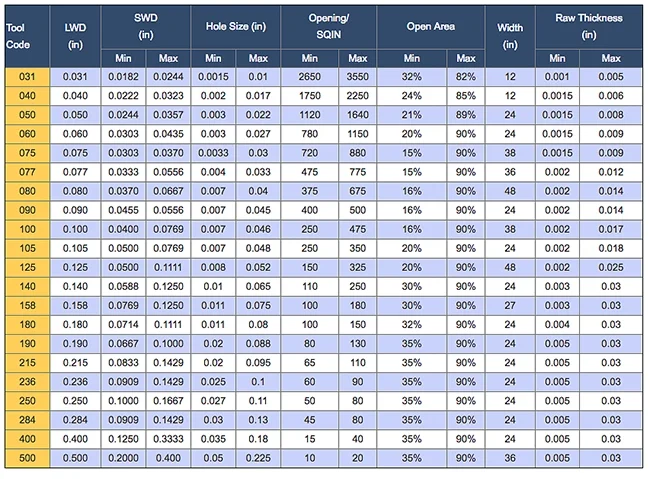
1) Open area (%)
Impacts weight, airflow/resin flow and effective cross‑section for conductivity. Higher open area reduces mass but lowers metal cross‑section.
2) Mesh size and geometry (LWD/SWD)
Controls formability and how the surface prints through in composite skins. Choose raised or flattened patterns based on finish requirements.
3) Thickness and strand width
Thinner foils increase conformability and reduce weight while wider strands add stiffness and change sheet resistance.
4) Alloy and temper
Select for strength and forming behavior. Match to your process (e.g., bonding, cure cycles) and operating conditions.
We’re here to help you choose with confidence.
A clearer understanding of your options leads to better outcomes. If you have questions about expanded aluminum or need help comparing mesh choices, our team is ready to walk through the details with you.