
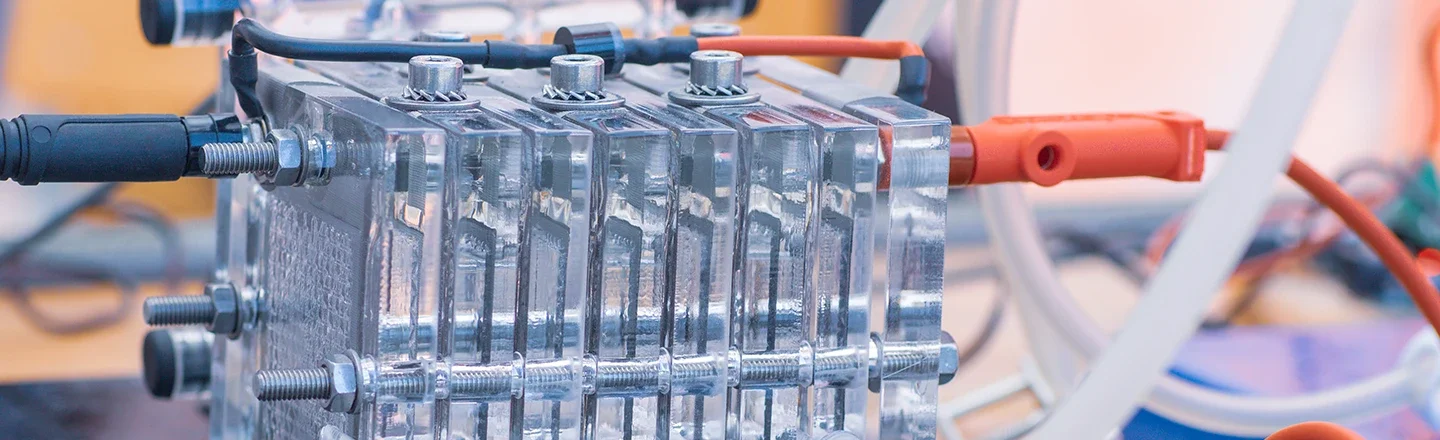
The future of hydrogen generation: Enhancing electrolyzer efficiency with expanded metal
Hydrogen is rapidly emerging as a vital clean energy carrier, with electrolyzer technology at the forefront of sustainable hydrogen production. As the demand for hydrogen energy grows, engineers face the challenge of designing electrolyzer systems that maximize efficiency, durability and cost-effectiveness. Advanced materials like expanded metal meshes are proving essential in meeting these challenges by improving fluid dynamics within electrolyzers by controlling the flow of liquids and gases. These expanded metal meshes can be coated to improve their interfacial electrical conductivity and long-term durability during electrolyzer operation. Understanding how these materials contribute to system performance is key to advancing hydrogen generation technologies and supporting the global transition to a low-carbon energy future.
Understanding hydrogen generation via electrolyzers
Electrolyzers produce hydrogen by splitting water into hydrogen and oxygen using electricity. This process, called electrolysis, is important for producing clean hydrogen, especially when powered by renewable energy.
How electrolyzers work
An electrolyzer contains two electrodes: an anode and a cathode, kept apart by a separator that blocks gas crossover and enables ionic movement. When electricity is applied, water molecules are split at the anode to release oxygen gas and charged ions. These ions travel through the separator to the cathode, where they react with electrons to form hydrogen gas
The main parts of an electrolyzer are:
- Anode and Cathode: Where oxygen and hydrogen are produced.
- Electrolyte: Allows ions to move between electrodes.
- Power Supply: Provides the electricity needed for the reaction.
Types of electrolyzers
There are three main types of electrolyzers, each with different designs and uses:
- Proton Exchange Membrane (PEM) Electrolyzers: Use a solid polymer membrane as the electrolyte. They work at low temperatures (122–176°F or 50–80°C) and respond quickly to power fluctuations. PEM electrolyzers require electrodes that conduct electricity well and are suitable for strongly acidic corrosive environments.
- Alkaline-Based Electrolyzers (AWE and AEM): Operate in alkaline environments and transport hydroxide ions. They operate at moderate temperatures (140–194°F or 60–90°C) and are well-suited for cost-effective large-scale hydrogen production. AWE and AEM electrolyzers require electrodes that withstand alkaline corrosion and maintain high electrical conductivity.
- Solid Oxide Electrolyzer Cells (SOEC): Use a ceramic electrolyte and operate at high temperatures (1,292–1,652°F or 700–900°C). They can achieve high electrical efficiency because heat supplies part of the energy needed for water splitting. The materials must withstand extreme temperatures and chemically aggressive conditions.
In all types, choosing the right coatings and materials for separators, electrodes, seals and current collectors affects how well the electrolyzer works and how long it lasts.
Measuring efficiency in hydrogen generation
Efficiency shows how well an electrolyzer turns electricity into hydrogen.
Key efficiency metrics
- Conversion Efficiency: The percentage of electrical energy converted into hydrogen energy usually ranges from 60% to 90%, depending on the electrolyzer type and conditions.
- Energy Source: Using renewable electricity (like solar or wind) results in lower carbon emissions associated with hydrogen production than when using electricity from fossil fuels.
Factors that affect efficiency
- Temperature: Higher temperatures can speed up reactions but require materials that handle heat well.
- System Design: Good design reduces energy losses by improving flow paths and managing heat.
- Material Choice: Durable, conductive and corrosion-resistant materials improve performance and reduce maintenance.
How expanded metal mesh supports hydrogen generation
Expanded metal mesh products enhance electrolyzer performance by combining open 3D architecture, electrical conductivity and mechanical robustness. These attributes make them effective in several roles:
- Current Collectors: Expanded metal meshes provide low-resistance pathways for current and uniform contact with electrodes. In PEM electrolyzers, titanium expanded mesh is commonly used for acidic corrosion resistance (often with surface treatments to maintain low interfacial contact resistance). In alkaline-based systems, nickel or stainless steel meshes are typically used for their conductivity and alkaline stability.
- Flow Field Components: The open geometry of expanded mesh promotes even distribution of water and gases which can reduce pressure drop and enhance mass transport when properly matched to cell flow architecture. With appropriate metal selection and surface treatments (corrosion protection coatings), expanded metal components can achieve high corrosion resistance and stable low interfacial resistance.
Practical applications and integration
Hydrogen produced by electrolyzers is used in:
- Hydrogen Fueling Stations: Supplying clean fuel for fuel cell vehicles.
- Industrial Processes: Providing hydrogen for refining, ammonia production and chemical manufacturing.
- Power-to-Gas and Microgrid Systems: Storing excess renewable energy as hydrogen, which can be converted back to electricity when needed.
Expanded metal and expanded metal mesh technology support these applications by enabling more efficient and reliable electrolyzer designs that perform well under varying operating conditions.
PPG DEXMET MICROGRID® expanded metal mesh technology
PPG Dexmet MicroGrid expanded metal mesh is specifically engineered to meet the rigorous demands of modern electrolyzer systems and hydrogen generation applications. Designed with precision and performance in mind, MicroGrid offers a unique combination of material properties that directly address key engineering challenges in electrolyzer design. Key benefits of MicroGrid expanded mesh for electrolyzer systems:
- Tunable open area: A customizable support structure with multiple open-area configurations to accommodate a wide range of porous transport layer technologies and cell designs.
- Electrical Conductivity: Helps ensure efficient current collection and distribution, minimizing resistive losses and enhancing energy conversion efficiency.
- Corrosion Resistance and Durability: Engineered from different metals to withstand the harsh environments found in electrolyzers. For example, titanium or niobium for acidic systems and nickel for alkaline. This baseline corrosion resistance can be further improved via the introduction of precious metal coatings.
- Optimized Flow Dynamics: The open, uniform structure facilitates effective gas and liquid transport, reducing pressure drops and improving mass transfer within the cell, which supports stable and reliable operation under varying load conditions.
Dexmet engineerd materials’ collaborative engineering approach ensures that MicroGrid expanded materials can be tailored to your specific project requirements, helping you to accelerate development timelines.
Advancing hydrogen generation efficiency with Dexmet MicroGrid expanded metal technology
Understanding how electrolyzers work and what affects their efficiency is essential for engineers designing hydrogen generation systems. Expanded metal and expanded metal mesh technology, such as Dexmet MicroGrid engineered materials, play a vital role in optimizing liquid and gas transport within electrolyzer flow fields and porous transport layers. Electrical conductivity and durability can be further improved when combined with an appropriate protective coating. Leveraging these materials helps create efficient and reliable hydrogen production systems that support a lower-carbon emission energy future.