
It’s hard to believe that it’s been a decade since the debate on whether a dress was black and blue or white and gold took the internet by storm. The post became a phenomenon and perfectly illustrated how people experience color differently:
Was the dress black and blue or white and gold?
While it was eventually confirmed to be black and blue, the intense debate challenged scientists’ understanding of color vision and highlighted how our brains interpret color based on assumptions about lighting conditions. This article explores the science behind human color vision, the factors influencing color perception, and why precise color understanding is essential in fields like industrial coatings.
What is Color Perception?
After years of research, it is believed that how we each saw "the dress" depended on assumptions that our brains made about the dress being in natural light (white and gold) or artificial light conditions (blue and black) and how it filtered that information.
According to the U.S. National Library of Medicine, color perception is defined as the mental processing of chromatic signals (color vision) from the eye by the visual cortex where they are converted into symbolic representations. Color perception involves numerous neurons and is influenced not only by the distribution of wavelengths from the object in sight, but also by that object’s background color and the contrast of brightness at its boundary.
How we experience color is a combination of our innate or learned color perception and various physical and neurological factors.
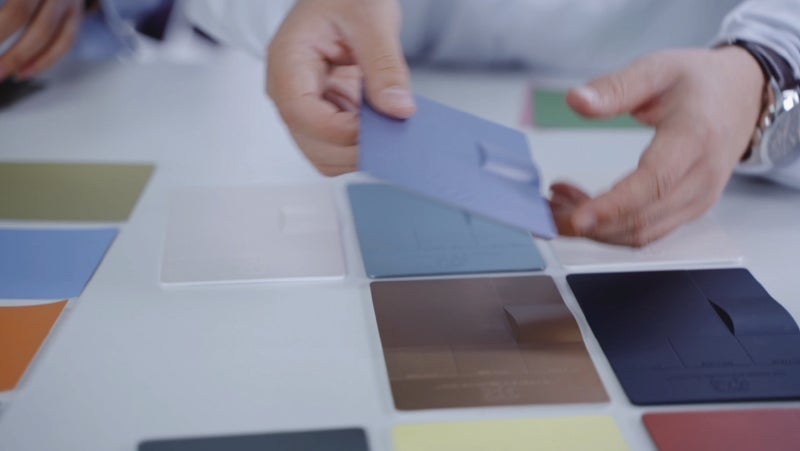
Factors Influencing Color Perception
For most of us, the slight differences in how we see color has no major impact on our daily lives. But that is not the case for stylists whose customers depend on precision to communicate and translate color effectively. Issues with color can halt the progress of a project or negatively impact sales.
To be effective, stylists are acutely aware of the many factors that influence color perception including:
- Lighting: The spectral composition of light changes how colors appear. For example, a red car looks different under sunlight versus artificial light.
- Age: The eye’s lens yellows with age, reducing sensitivity to blue and violet hues.
- Physical Well-being: Neurotransmitters like dopamine influence color perception; fatigue and certain medications can alter color vision.
- Background Effects: Surrounding colors affect how we perceive an object’s color. Neutral gray backgrounds are used in color assessment to minimize bias.
- Viewing Angles: Colors, especially metallic or translucent ones, can appear brighter or darker depending on the angle of view.