
Powder coatings have evolved far beyond their original role as durable alternatives to liquid paint.
Contemporary powder technologies offer exceptional design flexibility with a wide range of colors, gloss levels and textures, along with outstanding durability, application efficiency and formulations without solvent NIA (non-intentionally added) that emit no volatile organic compounds (VOCs).
As a result, manufacturers worldwide are increasingly adopting powder coatings for their unique combination of performance, aesthetics and sustainability advantages.
Beyond these attributes, specialty powder coatings are redefining the role of industrial finishes by offering advanced functionality tailored to specific performance needs. Below is an overview of some formulations making an impact across industry today.
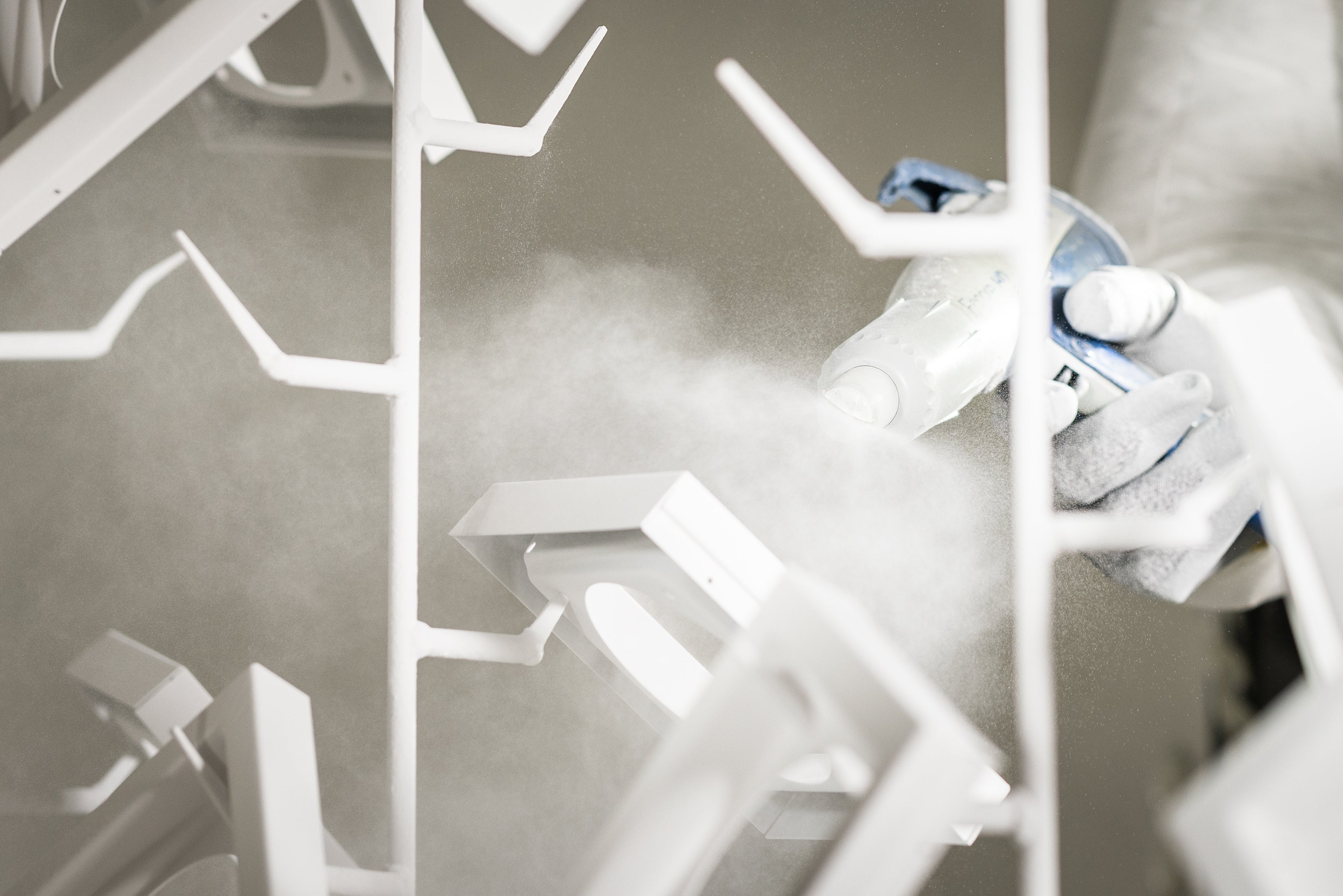
FGIA/AAMA 2605 Architectural Powder Coatings
Architectural powder coatings are among the fastest-growing segments of the coatings industry.
Powders meeting FGIA/AAMA 2605 specifications represent the highest performance tier for architectural aluminum. They are engineered to withstand intense UV exposure, humidity, salt spray and temperature extremes while maintaining long-term color and gloss retention.
Typical applications:
- Curtain walls
- Window and door systems
- Architectural facades
- Monumental structures
- Commercial buildings
UL and IEEE-Compliant Powder Coatings
UL and IEEE standards help ensure powder-coated electrical components meet rigorous safety and performance requirements.
UL standards focus on characteristics such as flammability, dielectric strength and heat resistance, while IEEE standards address long-term reliability, insulation performance and environmental durability. Together, they provide critical benchmarks for coatings used in electrical and industrial applications.
Typical applications:
- Electrical enclosures
- Switchgear
- Transformers
- Power distribution equipment
- Industrial control systems
High Transfer Efficiency (HTE) Powder Coatings
Powder coatings already offer excellent adhesion through electrostatic application, but high-transfer-efficiency (HTE) powders further improve first-pass transfer rates.
These formulations provide more uniform coverage on complex geometries and improve penetration into recessed areas and hard-to-reach surfaces. First-pass transfer efficiencies can exceed 85%, reducing powder consumption by 20% to 25% while supporting lower operating costs and more sustainable finishing processes.
Key benefits:
- Higher transfer efficiency
- Reduced material consumption
- Lower operating costs
- Improved sustainability
- Better coverage on complex parts
High-Edge Coverage Powder Coatings
Traditional powder coatings often struggle to adequately coat edges, corners, grooves and weld seams due to the Faraday cage effect, which is the phenomenon that limits powder deposition on hard-to-reach areas.
Modern high-edge formulations are engineered to deliver significantly improved coverage and film build on critical edges without sacrificing finish quality. Recent innovations have further enhanced surface smoothness and consistency while maintaining exceptional edge protection.
Typical applications:
- Fabricated metal products
- Shelving systems
- Agricultural equipment
- Heavy machinery
- Metal furniture
Food- and Water-Compliant Powder Coatings
While they aren’t new, there are powder coatings engineered for food safety. NSF-certified powder coatings help to protect public health in food-processing and drinking-water applications.
- NSF 51 coatings are designed for food-contact equipment such as racks, mixers and processing machinery.
- NSF 61 coatings are approved for use on drinking-water components including pipes, valves, tanks and fittings.
These coatings provide durable, sanitary surfaces that resist contamination and support regulatory compliance.
Powders for Drinkware
Consumer demand for safer food-contact products continues to grow. Specifically formulated without BPA powder coatings are widely used on tumblers, bottles and other food-contact products. These formulations eliminate bisphenol A while maintaining the durability, color retention and dishwasher resistance consumers expect.
Typical applications:
- Water bottles
- Tumblers
- Travel mugs
- Food-contact containers
Non-Skid and Textured Powder Coatings
Non-skid powder coatings improve traction on walking and working surfaces, helping reduce slip-and-fall risks in industrial, commercial and public spaces.
In addition to enhanced safety, these coatings provide excellent resistance to wear, impact and chemicals, delivering long-term durability in demanding environments.
Typical applications:
- Stairways
- Platforms
- Ramps
- Industrial flooring components
- Recreational equipment
Low-Temperature Cure Powder Coatings
Conventional powder coatings typically require curing temperatures between 325°F and 400°F (163°C to 204°C). Low-bake powder coatings cure at lower oven temperatures, lowering energy consumption and enabling powder coating of heat-sensitive substrates such as plastics, wood and wood composites.
Many formulations also offer wider cure windows and faster cure schedules, improving process stability and increasing production throughput.
Key benefits:
- Reduced energy usage
- Faster production cycles
- Improved process flexibility
- Compatibility with heat-sensitive substrates
- Higher manufacturing efficiency
Antimicrobial Powders
Today, coatings manufacturers are formulating solutions with silver ionic technology that help to inhibit the growth of microbes and fungi on cured paint films that can lead to unpleasant odors, discoloration and corrosion.
In layman’s terms, silver ions penetrate the membranes of bacteria, bind to essential elements like DNA and disrupt their functions, including multiplying, ultimately helping to deactivate them.
These antimicrobial protected powder coatings are durable, retain their color and are stable even in high temperature and work to guard the substrate from the growth of harmful microbes and bacteria.
Extreme Mar-Resistant Powders
Extreme mar-resistant powders provide exceptional resistance to scratches, scuffs, corrosion and UV exposure.
Common applications include appliances, shelving, fitness equipment, furniture and building products where finish appearance and durability are critical over the product's lifecycle.
Typical applications:
- Appliances
- Shelving systems
- Fitness equipment
- Furniture
- Building products
Anti-Graffiti Powders
Graffiti removal can be costly and time-consuming for municipalities, transit systems and property owners.
Anti-graffiti powder coatings create a non-porous surface that prevents paints, markers and adhesives from bonding strongly to the substrate. This allows graffiti to be removed more quickly and economically, often without harsh chemicals, while helping to preserve appearance and reduce maintenance costs.
Typical applications:
- Transit systems
- Public infrastructure
- Street furniture
- Commercial buildings
- Architectural surfaces
Retroreflective powder coatings
Launched in 2022, PPG ENVIROCRON® LUM is the industry’s first commercial retroreflective powder coating, featuring proprietary, patent-pending technology that reflects light back to its source to improve visibility at night and in low-light conditions. By embedding retroreflective glass beads within a durable single-layer powder coating, it combines the safety benefits traditionally found in retroreflective liquid paints, tapes, and fabrics with the strength sustainability and performance advantages of powder coatings.
Typical applications:
- Traffic infrastructure
- Safety barriers
- Bollards
- Industrial safety equipment
- Pedestrian pathways
- Bicycles
Robust Black powder
Designed for demanding production environments, robust black powder coatings offer superior opacity and coverage that help minimize the visual impact of unavoidable carryover. In addition to improving first-pass quality, their strong hiding characteristics contribute to a more uniform finish and can mask minor surface imperfections.
The Future of Specialty Powder Coatings
These specialty technologies demonstrate how far powder coatings have evolved, offering benefits, finishing capabilities and performance advantages once considered out of reach.
Manufacturers benefit from reduced VOC emissions, improved sustainability, lower operating costs and longer-lasting finishes that maintain their appearance longer in real-world conditions.
As innovation continues, powder coatings will become even more versatile, efficient and capable of meeting the evolving performance demands of modern products.
Through decades of research, proprietary technologies, and global manufacturing expertise, PPG has played a leading role in advancing powder coating performance, sustainability and application efficiency. As specialty powder technologies continue to emerge, PPG remains at the forefront of shaping the future of high-performance coatings.