Color is a powerful influence on purchasing decisions, shaping consumer preferences for everything from appliances and electronics to vehicles and building facades. But have you ever wondered what it takes to bring a particular shade to life? Once trend forecasters identify emerging colors and designers create palettes, the real work begins.
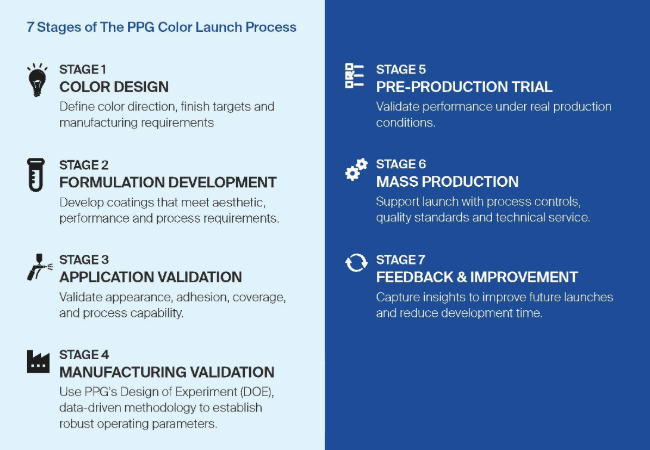
At companies like PPG, creating a new coating color involves far more than a visually appealing shade. It requires a team of scientists, color experts and technical specialists to translate an idea into a high-performance coating that performs reliably in the real world.
A coating color may begin as a concept, but it becomes reality only when it can withstand the demands of its intended application and environment.
From Color Trend to Coating Formula
Every color starts with a signal.
Color trends are rarely arbitrary. They often emerge in response to broader cultural, economic and societal forces that influence how people want products and spaces to look and feel. By studying these signals, color forecasters and design experts identify the shades likely to resonate with customers in a particular moment in time. But translating those insights into a market-ready coating requires extensive scientific development.
Coating scientists work with a variety of pigments, resins, additives and other raw materials to achieve the desired color, finish and performance characteristics. What may seem like a simple shade can require rigorous formulation work to ensure that it looks exactly as intended across a range of surfaces and applications.
The process becomes even more complex when the same color must appear consistently on different materials, from metal and plastic to wood and composite substrates. A color that looks perfect on a design sample must maintain the same appearance when applied at manufacturing scale.
Why Color Matching Is Harder Than It Looks
One of the most fascinating challenges in color development is ensuring consistency.
Color perception changes based on lighting conditions, viewing angles and surroundings. A shade that is just right in a design studio may look noticeably different under sunlight, fluorescent lighting or LED illumination.
This phenomenon makes precise color matching a critical part of the coating development process.
Coating stylists and technicians spend significant time evaluating how colors behave in different environments to ensure that they meet customer expectations.
For global manufacturers, consistency is especially important. Whether a product is manufactured in North America, Europe, Latin America or Asia, consumers expect the same recognizable color every time they see it.
Achieving that level of consistency requires sophisticated technology, rigorous testing, controlled manufacturing processes and stringent quality standards.
The Balance Between Appearance and Performance
A coating protects a product from wear, corrosion, abrasion, UV exposure, chemicals and other environmental challenges. At the same time, color helps communicate a brand's identity, position a product in the marketplace and create an emotional connection with consumers.
This intersection of performance and perception is where coating science becomes especially important.
A bright red construction vehicle, a premium black appliance or a signature consumer electronics finish must maintain its appearance throughout the product's lifecycle. If a vibrant color fades, chalks or changes over time, the customer experience and brand perception can suffer.
That is why coating formulations are developed with both aesthetics and durability in mind.
Engineering Color to Last
Consumers often choose products because they are drawn to a specific color. What they may not realize is the amount of science required to retain that color quality for years. The chemistry behind a coating may be invisible to most consumers, but it plays a critical role in ensuring that the color they experience today is the same color they experience years from now.
Where Insights and Chemistry Merge
Color often begins as an expression of culture, a reflection of what people value, need or aspire to in a particular moment. But bringing that color to life requires science.
At PPG, the process of creating a new color combines insights from trend forecasting, design and consumer preferences with expertise in chemistry, material science and coating technology. The result is a coating that not only captures the spirit of the moment but also delivers durability, resilience and long-term performance.
Predicting the new up and coming shade requires more than understanding the influences that shape color preferences. It's about engineering a coating that allows that color to endure.