
Transportation

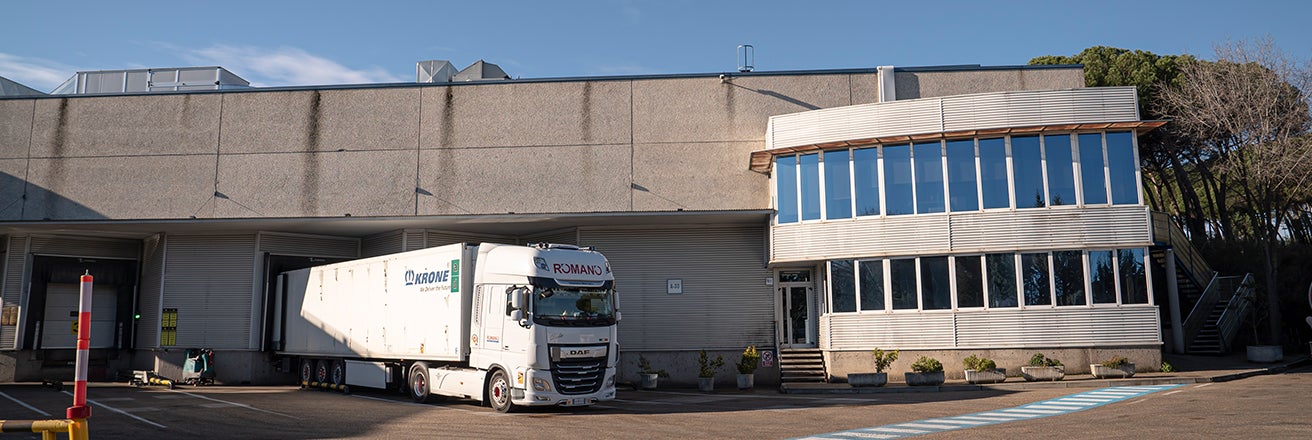
Lorry pulled into loading bay of large building

We deliver operational excellence through our focus on safe and efficient transportation.

The safe and efficient transportation of our products to our global customers is paramount. Internal expertise, mandatory practices and effective processes help ensure our products make it to their destinations safely and minimize the environmental impact of transportation.

Spills and transportation incidents in 2025

Our incident report numbers remain stable, underscoring our robust safety framework and showcasing the effectiveness of our safety protocols. Throughout 2025, our teams documented 205 incidents through U.S. DOT 5800 incident reports or PPG transportation incident reports, accounting for under 0.042% of all shipments. Nineteen of these incidents warranted prompt notification to governmental authorities and were classified as significant according to our internal standards and Sustainability Accounting Standards Board (SASB) guidelines, with 14 occurring within the U.S. and five outside U.S. territory.
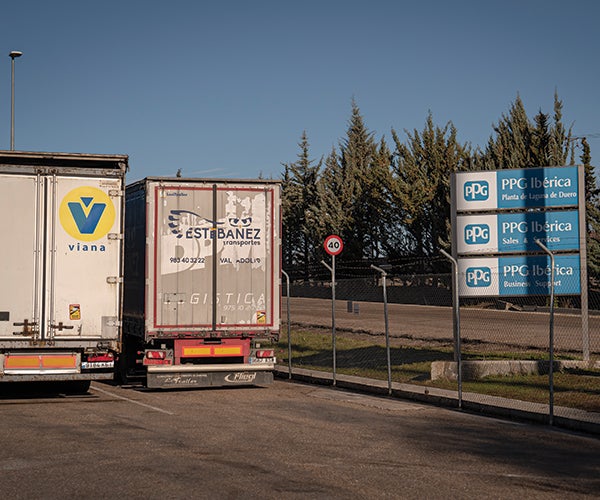
Lorries outside PPG premises

Global Safety Week: Prioritizing spill prevention

In October 2025, we held our first ever Global Safety Week. The event brought together employees from across the company to participate in activities focused on health and environmental safety. Recognizing the importance of minimizing transportation incidents, events on the Thursday of Global Safety Week focused on safe transportation and spill prevention.

We hosted a series of targeted spill prevention trainings and demonstrations, hazard scavenger hunts, and event-specific training videos produced by EHS and operations leadership. Across these activities, teams emphasized prevention-first behaviors for shipments, starting with proper classification and documentation, secure packaging and load integrity and prompt reporting of spills. The week also reinforced readiness by ensuring drivers, logistics partners and receiving teams understand what “good” looks like for spill response, escalation and containment during transit.

Supply chain decarbonization

PPG products are often applied to end products within the territory that they are produced, providing a strategic advantage to our customers in supply security and reducing the environmental impact of transportation. We focus on initiatives to minimize transportation-related emissions across our global supply chain. Our multi-faceted approach includes optimizing shipping patterns, consolidating shipments and strategic shifts toward lower-emission transport modes.

In EMEA, PPG integrates performance, cost and sustainability criteria into freight tender evaluations, giving preference to carriers that demonstrate strong management against these aspects. Our transportation management team continues to award more business to carriers with vehicles that utilize hydrotreated vegetable oil (HVO), a renewable diesel alternative. HVO, produced from waste vegetable oil, can reduce transportation emissions by up to 90%. It can be used to power diesel vehicles without significant modification, which significantly reduces the barriers to its use.

While PPG continues to actively pursue decarbonization opportunities, current market limitations present certain constraints. In some instances, there are not cost-effective methods available to reduce the emissions associated with moving our products. While the range of electric vehicles has improved, PPG continues to monitor developments that provide greater range, better cold weather performance and hauling capabilities for heavy loads before implementing electric trucks for our transportation needs.

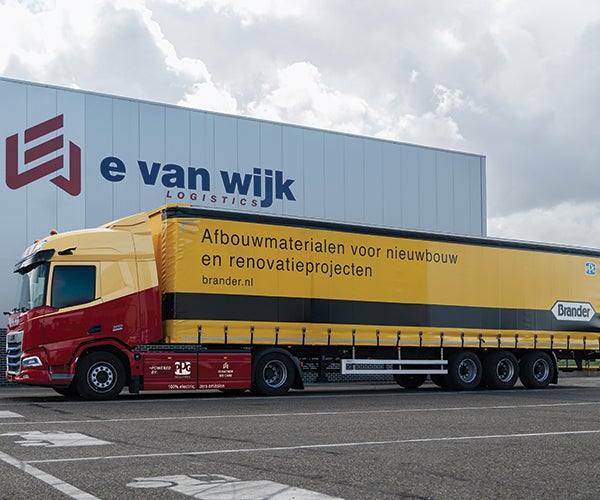
Large yellow lorry outside industrial building

Shipping with electric vehicles in Giessen, the Netherlands

PPG's EMEA operations are rapidly evolving into a model of sustainable logistics. At one of our partner facilities in Giessen, the Netherlands, we’re collaborating with E. van Wijk Group to develop our first distribution center that leverages onsite renewable energy to power a fleet of electric vehicles. The facility uses 2,800 solar panels installed on its warehouse roof to generate electricity stored in a 4.8 MWh battery. The renewable energy generated on-site is used to power local operations and charge the delivery vehicles that transport PPG products off-site. On an annual basis, E. van Wijk handles over 8,000 shipments for PPG from this facility. From August through December 2025, when electric transport was implemented, this resulted in approximately 90 metric tons of avoided CO₂ emissions.

Delivery fleet optimizations

Across our business in the U.S. and Canada, we have historically relied on a dedicated fleet of delivery vehicles, which were owned and operated by a single third-party. These dedicated vehicles would deliver PPG products and then be forced to return empty to our facilities to refill for the next delivery. Based on data from our transportation management system, trucks would be running empty for as much as 25% or more of the total distance driven. As part of our continued focus on the efficiency of our transportation activities, we have transitioned to a more distributed network of over the road (OTR) common carriers. This allows us to select more efficient and cost-effective partners for specific business units and routes, helping us to avoid excess carbon emissions from trucks returning empty to PPG facilities. We also seek partners with newer, more fuel-efficient vehicles, which reduce the emissions associated with PPG deliveries. In 2025, one of our distribution partners added 64 new fuel-efficient trucks to their fleet, cutting diesel consumption and reducing annual emissions by 1,515 metric tons of CO2e.

For more information about our approach to safe transportation, including the ways that we engage with our suppliers, see the bottom of this web page.

Multi-year data highlights

Transportation incidents

Scroll right to view further data »


2025202420232019
Total number of incidents reported205263276293
Number of significant incidents198920

Our approach to transportation