
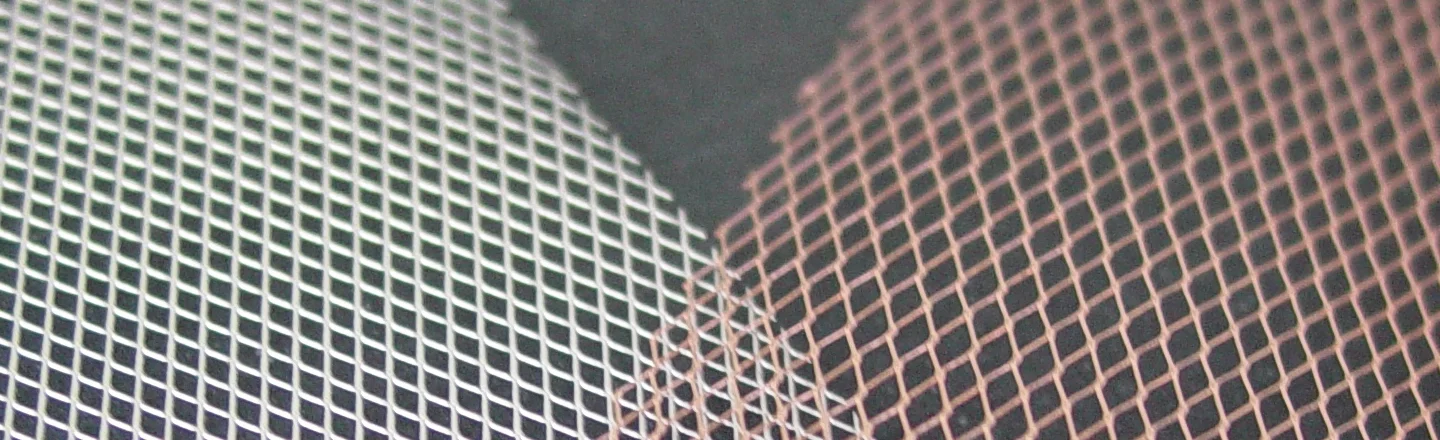
Expanded metal mesh is a highly versatile material formed by simultaneously slitting and stretching sheet metal to produce a network of interconnected diamond- or hexagon-shaped openings. This unique manufacturing process results in a single, continuous sheet with no joints or welds, delivering a combination of mechanical strength, weight efficiency and precise open-area control. Engineers value expanded metal mesh in demanding, high-performance applications because of its exceptional strength-to-weight ratio and intrinsic durability compared to solid sheet metal, especially where lightweight reinforcement and controlled airflow or conductivity are required. Expanded metal mesh is particularly attractive when performance standards must be met while enabling integrated solutions, including compatibility with composite materials, tailored thicknesses and scalable customization. Its adaptability for bonding to polymers or resins and its inherent conductivity make it indispensable in advanced aerospace, energy, automotive and industrial applications establishing it as a material of choice for solving modern engineering challenges.
What is expanded metal mesh?
Expanded metal mesh is created through a precise process that involves slitting and stretching a solid sheet of metal, resulting in an integral lattice of interconnected strands and openings without joints or welds. This method fundamentally distinguishes expanded metal mesh from alternatives such as woven wire, which consists of individual wires interlaced together, or perforated materials, in which holes are mechanically punched into a sheet that otherwise remains unbroken. The absence of welds or seams in expanded metal mesh eliminates failure points commonly associated with woven options, endowing the mesh with greater mechanical integrity and a predictable performance profile in demanding environments. Expanded metal mesh offers a continuous, single-piece structure that is intrinsically resistant to unraveling during fabrication or integration. Its high strength-to-weight ratio makes it exceptionally advantageous in applications where reduced mass is critical, but where structural reinforcement cannot be compromised.
The unique manufacturing technique allows for precise control over open-area percentage and overall thickness, enabling engineers and designers to tailor mesh characteristics to specific project needs, including electrical conductivity and compatibility with composite applications. This versatility not only facilitates enhanced functionality across a range of demanding industries but allows for seamless integration into engineered assemblies requiring advanced performance, durability and scalability.
Key Properties of Expanded Metal Mesh
Expanded metal mesh possesses a range of distinctive properties that make it highly effective and versatile across challenging engineering environments.
(1) Open Area Control
Open area control is a fundamental advantage of expanded metal mesh. This capability is essential for applications requiring optimized airflow, electromagnetic shielding, fluid filtration or controlled weight reduction.
(2) Electrical Conductivity
Expanded metal mesh exhibits outstanding electrical conductivity, especially when fabricated from metals such as aluminum, copper or nickel. This property enables seamless integration into systems demanding EMI/RFI shielding, grounding or current-carrying pathways, as seen in aerospace lightning strike protection and electronics enclosures.
(3) Controlled Weight
Controlled weight is another notable characteristic, since the mesh's interconnected lattice structure provides high mechanical strength with minimal material mass. This high strength-to-weight ratio is critically important in aerospace, automotive and energy applications, where reducing overall mass can help improve fuel efficiency, payload capacity and system performance. The mechanical strength and durability of expanded metal mesh stem from its continuous configuration with no joints or welds, which resists tearing and unraveling under dynamic loads.
(4) Bonding
The formability and bonding capability of expanded metal mesh help ensure ease of integration into diverse assemblies. Its ability to conform to complex geometries or to act as a reinforcement layer enhances composite structures and supports demanding fabrication processes. Importantly, expanded metal mesh demonstrates exceptional compatibility with composite materials (such as resins, prepregs and various polymers) facilitating strong mechanical bonding and electrical linkages within advanced material systems. These core attributes collectively underpin expanded metal mesh's role in enabling innovative, high-performance applications.
Common Applications of Expanded Metal Mesh Across Industries
Expanded metal mesh is vital in advanced industries for its strength, conductivity and flexible design. In aerospace and advanced mobility, it provides lightning strike protection, EMI/RFI shielding and lightweight structural support for aircraft and eVTOLs. Its customizable open area ensures ventilation and charge dissipation for safety-critical applications. In energy systems, it supports hydrogen generation and enhances thermal and electrical management, improving reliability and efficiency in renewables. Industrial uses include filtration support for fuels and gases, EMI shielding in electronics and lightweight structural reinforcement.
Aerospace & Urban Air Mobility
- Lightning strike protection
- EMI/RFI shielding
- eVTOL applications
- Lightweight structural reinforcement
Energy & Power Applications
- Hydrogen generation systems
- Battery energy storage (BESS / ESS)
- Thermal and electrical management layers
Industrial & Structural Applications (Non-Aerospace)
- Filtration support layers (non-air/water filtration)
- Gas and fuel filtration
- Microelectronics
- Open-area structural support
Expanded Metal Mesh in Composite Material Applications
Expanded metal mesh plays a strategic role in advancing the performance and reliability of modern composite material systems. By incorporating expanded metal mesh as an embedded layer within composites, engineers can significantly enhance structural reinforcement without compromising weight efficiency, a benefit particularly valuable in applications where mass reduction translates directly to improved fuel efficiency, payload capacity and system responsiveness. The conductive properties of expanded metal mesh, especially when paired with materials such as aluminum, copper or nickel, enable the creation of integral electrical pathways within composite architectures. This is vital for electromagnetic interference (EMI) and radio frequency interference (RFI) shielding and is especially critical for lightning strike protection in aircraft and wind turbine blades. The open-area design and continuous structure of expanded metal mesh facilitate uniform resin or polymer dispersion during composite layup, improving mechanical bonding and reducing the risk of delamination. Expanded metal mesh is commonly integrated with carbon fiber composites, glass fiber composites and both thermoplastic and thermoset resin systems, each offering distinctive advantages for mechanical strength, environmental durability and electrical performance. The versatility of expanded metal mesh in these advanced material systems not only underpins higher levels of durability but also empowers engineers to meet stricter certification requirements and performance standards in demanding industries. Its ability to be tailored in thickness, open area and alloy composition allows for precise customization to suit the unique requirements of each composite application, laying the foundation for innovative, next-generation engineered solutions.
Materials and Variations of Expanded Metal Mesh
Expanded metal mesh is manufactured from a diverse range of materials, allowing engineers to tailor its properties precisely to the demands of specialized industries. The most commonly utilized metals are:
- Aluminum, valued for its low density, corrosion resistance and electrical conductivity
- Copper, chosen for exceptional electrical and thermal performance
- Nickel, prized for high-temperature stability and chemical durability
- Specialty alloys such as stainless steel and titanium are available, offering enhanced mechanical strength or resistance to aggressive environments for mission-critical applications
Although metals dominate, select applications call for advanced polymers: high-performance materials like PTFE and PEEK allow for the fabrication of polymer-based meshes, expanding the mesh’s utility where metallic conductivity is not required but chemical inertness, high temperature characteristics and caustic environments are paramount. In all cases, the manufacturing process affords precise control over mesh parameters where engineers can specify mesh opening geometries, thickness and overall open-area percentage to match airflow, filtration, mechanical reinforcement or conductivity needs. Expanded metal mesh is available in a variety of standard and custom formats, from ultra-fine meshes employed in sensitive microelectronic filtration to robust, large-format meshes for structural support or EMI/RFI shielding in aircraft and energy systems. Advanced manufacturing enables the creation of hybrid configurations, integrating expanded metal mesh with resins, foils or composite laminates for application-specific benefits. Customization extends to surface treatments and coatings, such as conductive plating or corrosion-resistant finishes, further extending suitability across stringent environments. This comprehensive material versatility ensures that engineers and procurement specialists can confidently specify expanded metal mesh for any performance-driven requirement, unlocking innovations in lightweight reinforcement, shielding and system optimization.
Metal Mesh
Selecting the appropriate expanded metal mesh for advanced engineering projects requires a strategic evaluation of key technical parameters to help ensure optimal performance and compliance.
- It is essential to assess load and structural requirements, determining the mechanical stresses the mesh will encounter and specifying thickness, strand width and alloy composition accordingly.
- Electrical or thermal conductivity needs must be carefully considered, especially for applications such as EMI/RFI shielding or lightning strike protection, where material selection directly impacts system efficiency and safety.
- Environmental factors, such as exposure to extreme temperatures, moisture, chemical agents or corrosive atmospheres, significantly influence the long-term durability of the mesh and may necessitate specialized alloys or surface coatings for enhanced resistance. Compatibility with composite or layered systems is crucial; the mesh should demonstrate robust bonding capabilities with resins or polymers while preserving open-area characteristics for optimal mechanical reinforcement and uniform material integration.
- Engineers must adhere to industry-specific regulatory standards and certification protocols, ensuring that the selected mesh meets or exceeds requirements for safety, reliability and operational performance.
Through comprehensive consideration of these interrelated criteria, procurement specialists and engineers can specify expanded metal mesh solutions precisely tailored to both functional demands and stringent industry benchmarks, resulting in innovative, high-performance assemblies.
Why Choose MICROGRID® Expanded Metal Mesh from PPG and DEXMET® Corporation?
Dexmet expanded materials stands out as a global leader in engineered expanded metal mesh, leveraging decades of specialized expertise and state-of-the-art precision manufacturing. Our advanced processes help ensure exceptional product consistency, traceability and tight tolerances. Each batch of expanded metal mesh is produced to stringent quality standards, allowing for tailored customization of mesh size, alloy composition, thickness and open-area configuration to fit the unique performance requirements of every project. Moreover, our collaborative engineering support extends from initial consultation through prototyping and full-scale production, assuring that customers receive optimal solutions for critical applications, from lightning strike protection and EMI/RFI shielding to structural reinforcement in composite systems. By choosing Dexmet engineered expanded metal mesh, procurement specialists and engineers gain a trusted partner dedicated to innovation, reliability and long-term material performance for even the most complex and regulated environments.