
As offshore wind energy continues its rapid pace of expansion, the scale and complexity of wind farms are also increasing. The Global Wind Energy Council reports that offshore wind capacity reached more than 92 GW in 2025, led by bigger turbines with taller towers and longer blades. Heavier, taller structures are increasingly being installed in deeper waters, further from shore. While these advancements are critical to scaling offshore wind power, the remote locations and harsh environments introduce new operational challenges for turbine construction and maintenance, says Kahina Ouchaou, Global Product Manager at PPG.
Protective coatings have been used to safeguard assets in the oil and gas industries for decades, but offshore wind installations have several key differences from manned outposts. The costly maintenance procedures and access limitations of offshore wind farms are driving owners and developers to seek coating solutions that have an extended service life of 30 years or more, moving beyond traditional standards for offshore coatings.
In order to support the growth of renewable energy solutions, protective coatings for offshore wind needs to reach higher levels of performance while also balancing environmental responsibility. Recent advancements in high-build epoxy coatings are rising to meet these challenges, delivering improved application conditions and enhanced durability to meet evolving industry standards.
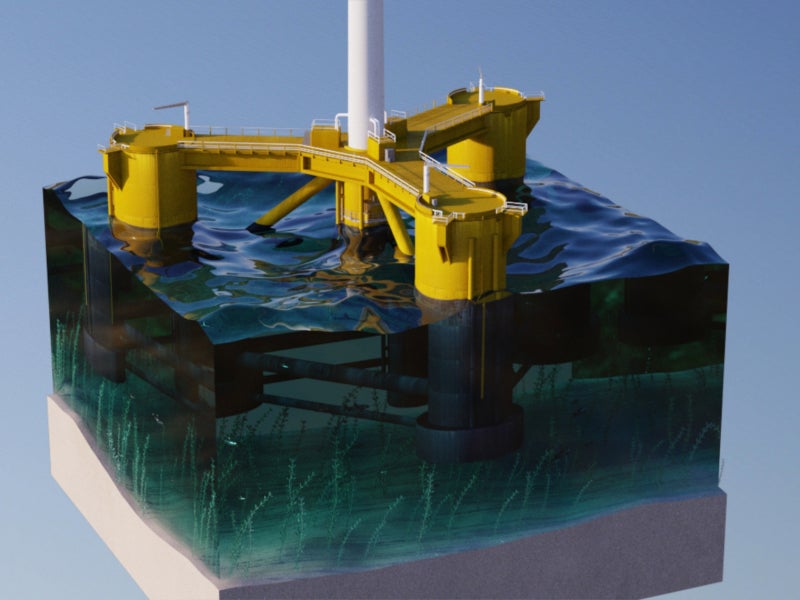
Demanding offshore conditions
This trend toward larger turbines installed in isolated open waters directly affects coating specifications. For fixed monopile and jacket structures, foundations and towers constructed onshore must withstand the stresses of transport from port to a wind turbine installation vessel such as a jack-up or crane vessel. Once installed, they face continuous saltwater immersion and abrasion from sand and sediment. In full immersion zones, coatings must resist prolonged exposure to seawater as well as cathodic protection systems. These electrochemical systems prevent rust from forming on submerged steel structures, but they create higher pH exposure conditions that can contribute to the breakdown of some coatings. Cathodic disbondment can also occur, where the coating begins to detach from the metal substrate locations where the coating film has been damaged or is too thin.
The splash zone, also known as the tidal zone, is exposed to the most aggressive conditions. The combination of salt spray, UV exposure and temperature variations creates a highly corrosive environment. It receives the majority of impacts from floating debris, ice and the mooring of maintenance vessels. Marine fouling also tends to attach to wind towers in this zone, and some organisms like barnacles can adhere so strongly that they penetrate the protective coating and cause breaks in its surface.
In addition to these exposures, the continuous rotating movements of wind turbines create vibrations that exert a tremendous amount of flexural stress on the tower. Coatings must have sufficient elasticity to resist cracking under these dynamic loads.
With such demanding service conditions, coating systems must demonstrate long[1]term performance across all of these metrics, including adhesion, abrasion and impact resistance, flexibility and resistance to cathodic disbondment, to minimize the need for urgent reactive maintenance.
Maintenance constraints
Operational and maintenance (O&M) costs are estimated to account for as much as 30% of the lifecycle costs of an offshore wind installation. Any unplanned downtime caused by maintenance requirements represents a costly loss of energy production time.
While offshore oil and gas platforms have regular inspection and maintenance routines with frequent traffic from helicopters and vessels, offshore wind turbines are unmanned and much more difficult to reach. Wind turbines maintenance requires the use of specialized vessels, trained crews and cooperative weather.
As the levelized cost of electricity (LCOE) is increasingly incorporated into the evaluation of renewable energy development, extending asset service life and reducing O&M costs are top priorities for offshore wind. Developers and EPC (engineering, procurement and construction) teams are now targeting longer service lifetimes, placing greater emphasis on coating systems that can deliver long-term performance with minimal maintenance.
Epoxy’s proven track record and next phase
Epoxy resins have a decades-long proven track record of offshore and marine vessel corrosion protection applications. They offer strong adhesion, chemical resistance and mechanical strength characteristics, making them well suited for the challenges of offshore wind assets.
Glassflake reinforcement is a standard method for enhancing the abrasion resistance of high-solids epoxy coatings. The thin glass flakes are used to increase the coating’s water and oxygen barrier and its mechanical strength. Glassflake reinforced coatings are often specified for offshore wind towers due to their high impact- and abrasion resistance.
Historically, the strength of glassflake coatings came with several trade-offs. High glassflake loading increases viscosity, making the coating more difficult to spray and more prone to clogs in spray equipment, as well as requiring the use of reactive diluents. Some coatings had a shorter pot life and lower sag resistance at high film builds. The next generation of high-build epoxy coatings now deliver corrosion protection and abrasion resistance comparable to glassflake-reinforced coatings, while reducing application difficulties and meeting applicable NORSOK and ISO requirements. These new formulations support increased operational efficiency with strong atomization characteristics and extended pot life. Solvent-free glassflake coatings represent another significant step forward. With low VOCs and no thinner required, coatings such as PPG SIGMASHIELD 950 deliver a highly durable, abrasion-resistant finish and help improve air quality and reduce chemical exposure for applicators.
Sustainability and regulatory drivers
Coating selection has become an important factor in helping manufacturers reach sustainability goals and prepare for evolving chemical regulations. The EU’s Chemicals Strategy for Sustainability, part of the European Green Deal, is driving a progressive phase-out of hazardous substances. The ‘one substance, one assessment’ framework, which took effect this year, aims to simplify and standardize risk assessment for chemicals across industries.
For coating manufacturers and offshore wind owners, this means prioritizing coatings that have a lower VOC content, reduced hazardous substances and improved application safety. It also requires consideration of the full lifecycle impact of coating systems from production and application to maintenance and eventual decommissioning.
With the latest glassflake technology designed for better flow characteristics and reduced VOCs, epoxy technologies support these goals, offering long-term corrosion protection while helping to reduce environmental and health impacts.
Legacy systems
Although offshore wind is a comparatively younger sector of the power industry, the adoption of new coating technologies tends to be slow. Offshore wind specifications are heavily influenced by legacy practices derived from offshore oil and gas, where demonstrated performance in the field is the primary benchmark for material selection.
Asset owners and operators are cautious about using new technologies, given the high cost of failure and the difficulty of conducting repairs offshore. As a result, there is often a preference for established systems with long service histories, even if they are not fully optimized for the specific demands of offshore wind.
To bridge this gap, modern validation techniques are becoming increasingly important. Methods such as Electrochemical Impedance Spectroscopy (EIS) provide accelerated testing capabilities to enable more accurate predictions for the long-term service life expectations of 30 or more years. These tools compliment the traditional testing standards and help build confidence in next-generation coating systems.
Standards development
For now, standards play a critical role in guiding specification practices and coating selection. Recognized international standards provide essential performance benchmarks, but specifiers should also understand how they continue to evolve to meet the needs of offshore wind.
NORSOK M-501 is the main global standard for protective coatings in offshore environments. Originally developed in the 1990s and last updated in 2022, it defines requirements for coating selection, surface preparation, application procedures and inspection. System 7a addresses carbon and stainless steel in the splash or tidal zone and System 7b addresses submerged carbon and stainless steel, and both are commonly used for the evaluation of offshore wind foundation coatings.
Another international standard, ISO 24656, also published in 2022, addresses coatings used with cathodic protection in offshore wind structures. With five coating categories, this standard classifies epoxy coatings with more than 20% glassflake as the top-performing technology with the slowest breakdown rate. These classifications were developed around offshore oil and gas structures, which differ from offshore wind foundations in important ways, especially concerning dynamic movement and loading characteristics.
In the EU, owners and EPC contracts may require coatings that meet the vgbe/ BAW-Standard VGBE-S-021, which addresses corrosion protection for offshore wind structures. The standard’s fourth edition was released in 2023. Developed in Germany by vgbe energy
e.V. and the German Federal Waterways Engineering and Research Institute (BAW; Bundesanstalt für Wasserbau), the standard identifies four corrosion stress zones and covers corrosion protection systems, coating application and cathodic corrosion protection.
More standards are currently in development. The proposal for ISO 25249 was accepted in 2024 and is currently under committee review. This standard will address comprehensive corrosion protection strategies for offshore wind structures, including paint systems, cathodic protection, corrosion environment assessments, maintenance strategies and total service life considerations. This standard is an important step in aligning performance frameworks with the operational realities of offshore wind.
Coating selection
As offshore wind farms are constructed in more remote sites, effective corrosion protection will be essential for maximizing the service lives of these massive structures. Coating systems must be able to deliver sustained protection over years of operation. Advances in high-build epoxy coatings help maximize durability with better application efficiency and environmental performance. During the specification and procurement process, owners and developers should consider suppliers who can provide:
• Advanced validation methods that support long-term performance predictions
• Coating systems optimized for offshore wind-specific conditions
• Solutions that balance durability, application efficiency and sustainability
• Expertise in navigating evolving regulatory and standards landscapes.
The end goal is to reduce total cost of ownership throughout the long service lives of offshore wind turbines by selecting the right corrosion protection system at the start. By aligning specification practices with real-world operating conditions, developers can make more informed decisions that support both asset integrity and lifecycle performance.
Originally published in PCE Magazine.