
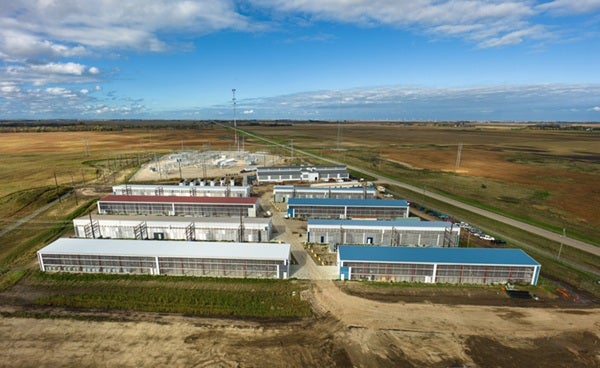
A data center project team once told me that a single day of delay could cost $14 million. That kind of pressure changes how teams evaluate every material on site.
Across today’s infrastructure landscape, that pressure continues to build. Investment is accelerating in data centers, semiconductor plants, power infrastructure, and water systems. These projects move quickly, carry high stakes, and leave little room for error. Every decision must support speed, consistency, and long-term performance, including protective coatings.
Investment Shifts Raise Expectations
In the United States, developers continue to invest heavily in digital infrastructure, power, and advanced manufacturing. The pace of data center development alone reflects how quickly timelines have compressed. These projects demand rapid delivery and tight coordination.
In parts of Latin America, the landscape looks different. Some large-scale energy projects have slowed, pushing asset owners and contractors to focus more on mid-sized infrastructure, as well as maintenance and repair work. That shift requires flexibility in both project strategy and material selection.
In one modular data center program in Latin America that supports hyperscale end users, production capacity reached up to 36 modules per month. For modules requiring passive fire protection, the coating application had to remain consistent and reliable at that pace. Even small inefficiencies in coating application created measurable schedule pressure.
The original coating system relied on multiple primers and topcoats, which introduced complexity across procurement, application sequencing, and quality control. Each additional step increased coordination requirements and the risk of rework.
Despite these regional differences, expectations remain consistent. Project teams need materials that perform under pressure, reduce risk and keep work moving. Coatings, once an afterthought, now play a direct role in helping to meet those demands.
Coatings Decisions Now Happen Earlier
Project teams no longer treat coatings as a late-stage purchase. Many now involve coatings expertise during design and preconstruction. Experience has driven that change. Late decisions often lead to rework, delays, coordination challenges, and increased project costs.
Earlier engagement helps teams avoid those issues. At the start of a project, teams ask practical questions.
The first question is whether a shop or field application better fits the project's schedule. Both approaches can deliver strong results, but they require unique considerations. Shop application offers consistency advantages such as factory settings, verified dry film thickness, predictable cure times, and quality control checkpoints.
When steel arrives on site already coated and inspected, project teams remove one variable from an already compressed sequence. Field application offers its own advantages, including simpler logistics for oversized steelwork; reduced exposure to transit-related coating damage; and tighter alignment with site sequencing, as conditions change.
Waterborne formulations have made on-site application more practical, helping support better working conditions and reduce environmental impact in occupied or partially enclosed environments. The right answer depends on the project, not a default preference.
The second question is how many steps the coating system requires. Direct-to-metal intumescent systems — i.e. coatings that workers can apply without a separate primer — can reduce application steps without sacrificing fire performance.
Fewer steps such as using a coating that doesn’t require a topcoat can mean fewer mobilizations, fewer inspection hold points, and faster handoffs to the next trade. For project teams evaluating systems early in design development, specification decisions made months before steel fabrication directly affect on-site schedule performance.
The third question is durability, and most preconstruction conversations give it too little weight. Fire protection coatings must survive transport, handling and construction activity long before the structure is erected.
On modular data center builds, where teams fabricate structural sections offsite and assemble them at pace, coatings absorb loading, stacking and transit stress that can require inspection and repair before commissioning. Rework on assembled or stacked modules proves difficult and sometimes impractical.
Selecting systems with demonstrated mechanical resilience eliminates that risk at the source, rather than forcing teams to make repairs on site.
These decisions influence labor requirements, inspection timing, and handoffs between trades. Addressing them early removes variables instead of managing them later.
Regional Collaboration Shifts Specifications
Many infrastructure projects now span regions. Engineering standards, product selection and performance expectations move across borders. That dynamic creates both challenges and opportunities.
Teams will need to align on standards, but they also benefit from shared experience. Lessons learned on one project can inform another in a different region. Strong collaboration helps teams adapt more quickly and make better decisions.
For coatings, that means combining global expertise with local execution. Solutions must meet regional requirements while supporting broader project goals.
A More Strategic Role Moving Forward
Coatings now sit closer to the center of infrastructure planning. They influence how projects progress, how teams manage risk and how assets perform over time. They can affect schedule reliability, labor efficiency and long-term maintenance.
Project teams that recognize this shift approach coatings differently. They engage earlier, ask better questions, and focus on performance alongside cost.
In a market defined by speed and complexity, those decisions can determine whether a project stays on track.
Jenn Solcz is vice president of PPG’s protective and marine coatings business for the Americas region, where she leads her teams to drive innovation and growth. With more than two decades of experience, she builds strong relationships across all levels of the organization, guiding the business to deliver high-performance solutions to its customers.
Originally published in CoatingsPro Magazine.