
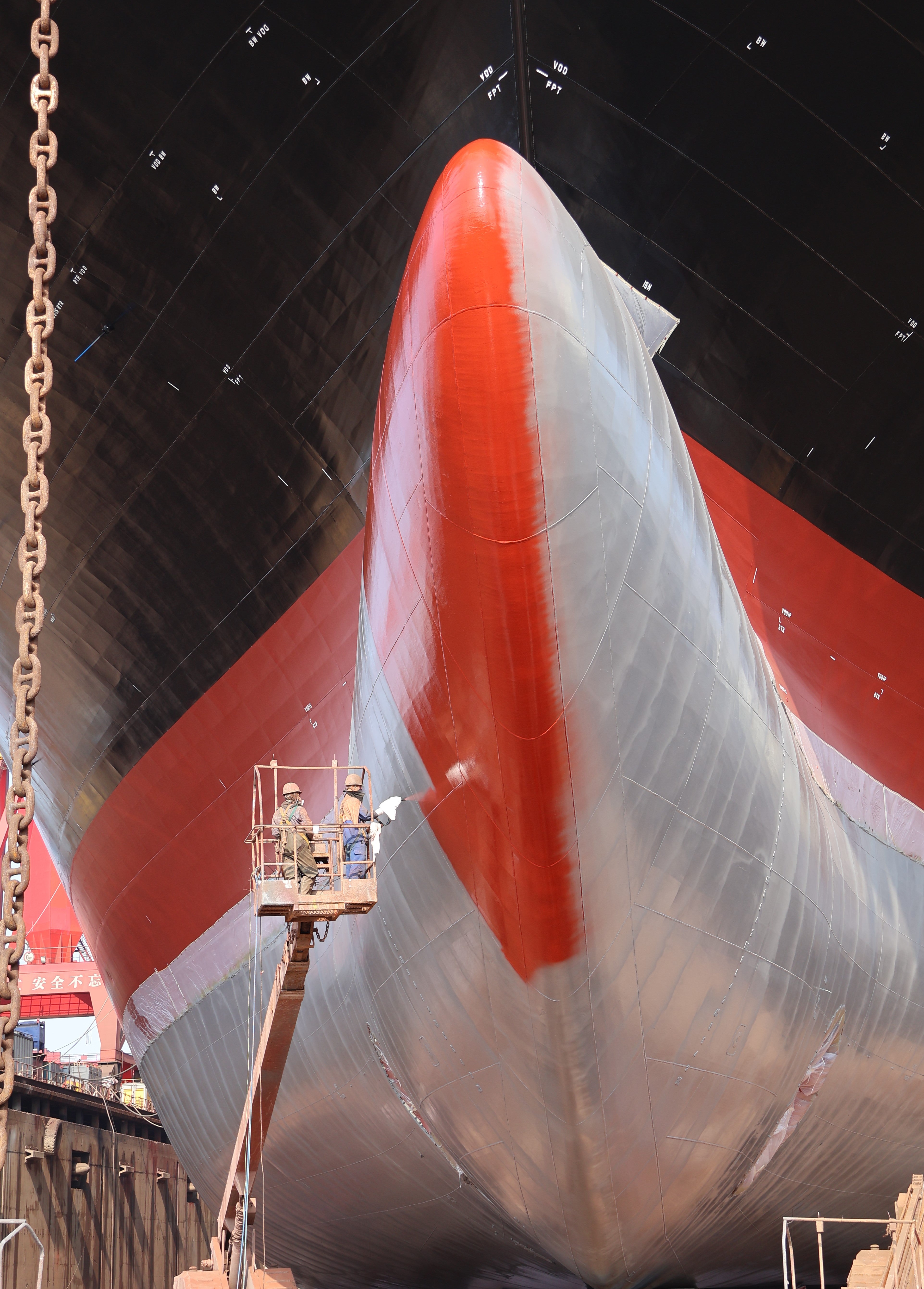
The marine industry faces pressure to cut emissions, improve efficiency and extend asset life. As regulators push shipping toward lower greenhouse gas emissions, coatings have played a more leading role. Hull condition and fouling control can affect fuel consumption, emissions performance, drydock planning and long-term operating costs. At the same time, new application methods and digital tools are changing how coatings are selected, applied, monitored and evaluated throughout a vessel’s life. Let’s take a deeper dive.
Sustainability as a driver
The International Maritime Organization is targeting a 20–30% reduction in greenhouse gas emissions by 2030, increasing focus on solutions that improve efficiency and reduce environmental impact. Marine coatings remain one contributing factor, particularly through antifouling technologies and fouling-resistant surfaces that limit marine growth and preserve hull efficiency over time. These gains can support emissions reduction targets while lowering operating costs. Biocide-free silicone hull coatings, for example, can help vessels achieve up to 20% power savings and reduce greenhouse gas emissions by as much as 35% compared to traditional antifouling systems.
Beyond fuel efficiency, coatings play a role in asset protection by extending maintenance intervals and preventing corrosion of steel structures. This helps lengthen vessel lifespan and reduce the need for repairs and material replacement, contributing to lower lifecycle emissions and improved efficiency across the value chain.
Rethinking application
Attention also turns to the application of coatings, particularly electrostatic application (ESTA). Unlike traditional airless spraying, ESTA charges paint particles and draws them to a grounded metal surface. The result proves a more even, precise coating with less rebound and significantly lower overspray.
While the technology has seen wide use in automotive and aerospace applications, the marine environment poses challenges due to exposure, humidity and scale. However, initial trials on a hydrogen-powered sailing vessel in the Netherlands helped shift that view. Applicators worked in a controlled environment, adjusting equipment manually and documenting results. The outcome showed strong adhesion and minimal rebound, encouraging additional development. Since then, the method has been tested and refined in shipyards. Adjustments for weather conditions, vessel size and substrate variability have made it more practical for large-scale use.
Recent projects illustrate its progress. A dry-docked oil tanker in Greece applied a fouling release coating using ESTA. The method allows charged coating particles to adhere evenly to the ship’s surface, creating an ultra-smooth, durable film while reducing overspray and material waste. Case studies have shown overspray reductions of up to 40%, helping contribute to cleaner operations and improved material efficiency. Additionally, the fouling release coating applied during the project delivers up to 20% power savings and up to 35% emissions reductions compared to traditional antifouling coatings, helping improve vessel efficiency and sustainability.
To date, electrostatic application has been successfully completed on more than 250 vessels worldwide.
Digital tools move into focus
Marine operators often rely on fragmented or limited historical data, making long-term planning and cost control difficult. New digital tools are addressing that gap.
New analytics platform can help ship owners and operators better analyze and optimize their seastock coatings purchasing data. It provides visibility into spending trends and identifies potential cost-saving opportunities, supporting more informed operational and strategic planning. By converting fragmented or limited historical data into a standardized, user-friendly format, the tool enables users to continuously update and interpret their data, making it easier to improve purchasing decisions, consolidate orders, and evaluate port selection strategies.
New platforms can offer enhanced spend transparency, predictive forecasting based on historical trends and real-time interactive dashboards. It allows users to independently analyze their data and anticipate future needs. By combining clear data visibility with actionable insights, the tool supports more efficient decision-making and long-term cost management.
At the same time, interactive tools such as 3D coating selectors make it easier to select and evaluate systems before application. Together, these technologies create a more connected approach that links selection, application and lifecycle management.
What’s ahead
Marine coatings now play a larger role than simple protection. They support operational strategy as the industry moves toward a more integrated approach, where coating selection, application methods and digital tools are managed together across the vessel lifecycle.
The next phase of development will push durability, reduce environmental impact and expand the use of data. Digital tools already give operators clearer insight into performance and cost, and that visibility will continue to improve planning and decision making.
As a result, shipowners and shipyards are beginning to manage coatings as a continuous process, connecting data, selection, application and maintenance.
Originally published in Marine Log.