Energy and Emissions

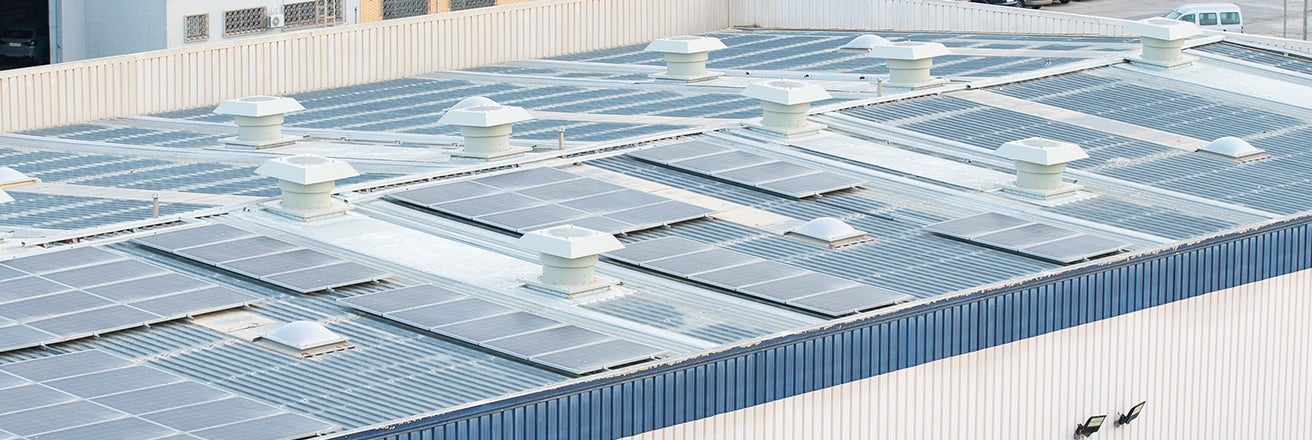
Large industrial building with roof covered by solar panels

PPG is committed to reducing our environmental impact through operational efficiency.

We work to reduce greenhouse gas emissions (GHG) across our operations and value chain through initiatives to minimize energy usage, improve energy efficiency and increase the energy that we source from renewable power generation. Validated through the Science Based Targets initiative (SBTi), our emissions reduction efforts lower operating costs and maximize resource efficiency.

Scope 1 and 2 GHG emissions reduction

Scope 3 GHG emissions reduction

PPG GHG Emissions for 2019 Baseline Year

Graphic showing scope 1, 2 and 3 GHG emissions for 2019 baseline year

In 2025, we achieved a 25% reduction in absolute direct (scope 1) and indirect (scope 2) GHG emissions from our 2019 baseline. These reductions represent continued progress against our company-wide 2030 goal of achieving a 50% reduction in GHG emissions from our own operations (scope 1 and 2 emissions). This target has been validated by SBTi and aligns PPG's operations with a 1.5 degrees Celsius future.

We also saw a 5% reduction in our scope 3 emissions (categories 1, 10, and 12) against our 2019 baseline. The reduction was primarily due to our active engagement with suppliers and grid greening benefits across the value chain. PPG continues advancing efforts to establish more comprehensive value chain data sharing processes with better supplier engagement and addressing downstream emissions. However, inherent data complexities continue to limit effectiveness and highlight challenges that extend beyond the capabilities of any single company.

Scope 1
covers emissions from sources that are owned or controlled by PPG.
Scope 2
emissions are indirect emissions from purchased energy.
Scope 3
emissions refer to all other indirect emissions an organization is connected to through its upstream and downstream business activities.

Reducing direct and indirect (scope 1 and 2) GHG emissions

Reducing GHG emissions from our own operations is our most direct means of contributing to the low carbon transition and reducing operational costs. To meet our 2030 goals, PPG has developed a decarbonization roadmap that prioritizes energy efficiency investments in our manufacturing facilities and increased use of renewable energy to replace our current sources of electrical energy supply. PPG's largest emissions sources come from the U.S. and Europe, representing 68% of our total 2025 emissions footprint.

In 2025, a new data collection system was implemented to streamline utility bill tracking and enhance reporting capabilities. We rebaselined to align with the updated process. Our 2030 scope 1 and 2 emission reduction target remains unchanged.

In 2025, 31% of our total purchased electricity was generated by renewable sources.  We continue to expand our renewable energy procurement efforts, focusing on initiatives that meet our customer's requirements and generate emissions reductions without adding cost to operations. We rely on a combination of virtual power purchase agreements (VPPAs) and contracts with utility providers to source renewable energy generated offsite. In 2025, PPG entered into VPPAs to purchase renewable energy certificates linked to solar parks in Leon County, Texas and Oriana, Texas. By the end of 2027, 66% of PPG's U.S. electricity will be from renewable sources.

In partnership with EnelX Advisory Services, we reached an agreement with Constellation for renewable energy certificates linked to a solar park in Leon County, Texas. The agreement will cover approximately 77 megawatts of capacity, the equivalent of 42% of our U.S. electricity use, and is expected to reduce our annual scope 2 emissions by more than 70,000 metric tons of CO2e. The solar park is expected to be operational in late 2026.

In total, our existing renewable agreements represent a reduction in our scope 1 and 2 emissions of more than 25% from our 2019 baseline. We continue to partner with external providers to evaluate onsite renewable opportunities and secure environmental attributes through VPPAs, which ensures long-term access to renewable energy attributes to support decarbonization goals. To date, we have completed on-site solar installations at our Querétaro, Mexico; Oak Creek, Wisconsin; Valencia, Spain; and Bucharest, Romania sites.

PPG takes a two-pronged approach to reducing energy use that includes process improvements and the adoption of new technologies, such as combined heat and power units. As we identify the need to replace process and utility equipment that is inefficient and at the end of its useful life, we are upgrading and retrofitting to more energy efficient assets. In Europe, the five PPG facilities that use the most energy have adopted rigorous energy management requirements in line with ISO 50001 standards to help systematize the identification of energy wasteful processes and reduce energy consumption. In 2025, we completed ISO 50001 certifications at our facilities in Caivano, Italy, Cieszyn, Poland, Quattordio, Italy, and Saultain, France.

Lloyd's Register Quality Assurance provided limited assurance on our scope 1 and scope 2 GHG data in 2025. View the assurance report.

Large industrial unit roof covered with solar panels

PPG boosts renewable energy use with solar technology in Querétaro

PPG's Coatings Services plant in Querétaro, Mexico has installed a solar panel system that will provide 61% of the facility’s annual energy needs. The installation will strengthen the plant's energy independence by drastically reducing our reliance on the local grid in the fast-growing Bajío industrial region, which accounts for 6.2% of Mexico's national electricity demand. In an area with high electricity demand and ongoing energy shortages, the project underscores the key role of renewable energy in supporting sustainable industrial development and operational resilience.

The investment will reduce the plant's exposure to electricity price fluctuations and help meet customer demands for the use of renewable energy in the manufacture of our products. In addition, each year the installation will avoid around 450 metric tons of CO₂e, significantly shrinking the plant’s emissions footprint in Mexico.

Reducing emissions across our value chain (scope 3)

PPG is committed to collaborating with our customers and suppliers to advance their own GHG emissions reduction goals and limit our collective impact. Our scope 3 emissions target focuses on our three most significant emissions categories: 1, 10 and 12. Together, these categories account for approximately 90% of our value chain emissions. We continue to collaborate with our suppliers to reduce emissions from purchased raw materials and services, innovate new products that reduce the emissions associated with application and curing of our products, and explore alternative feedstocks that reduce the emissions from the disposal and treatment of PPG products at the end of their useful life.

Car being electrocoated in assembly line

Reducing emissions in automotive manufacturing

PPG's advanced electrocoat solutions help automotive OEM manufacturers significantly reduce the carbon footprint of vehicle production by improving paint shop efficiency, reducing energy required to apply and cure the electrocoat, and reducing the overall quantity of applied electrocoat product. In a recent study conducted in partnership with global steel leader ArcelorMittal, our expanded bake electrocoat technologies reduced the oven energy and related carbon emissions phase by approximately 10% as compared to a conventional bake electrocoat. Moreover, our latest generation of electrocoat is highly efficient, and provides more uniform coverage than previous legacy technologies, enabling manufacturers to use less material while ensuring vehicle body corrosion protection. In another recent case study conducted with Toyota Motor Manufacturing Canada, we were able to reduce the electrocoat material carbon footprint by 20%. These partnerships demonstrate how PPG's sustainably advantaged electrocoat technologies support customers' decarbonization goals today, while providing a model for future partnerships to advance bio-based materials, next-generation curing technologies, and process improvements throughout the manufacturing process. Read more here and here.

In 2025, we focused on gathering higher quality emissions data from our suppliers to better understand and verify our scope 3 emissions reductions. PPG now requires suppliers to report using the Together for Sustainability (TfS) Product Carbon Footprint data model, which provides more consistent and comparable information across the value chain. Our procurement team conducts due diligence on supplier data to confirm that reported emissions reductions are accurate, verifiable and aligned with TfS minimum standards.

Learn more about our progress in the Supplier Sustainability section.

PPG Scope 3 emissions reduction focus areas

Category 1
Purchased goods and services
Emissions generated while producing the raw materials and services that PPG purchases to make paints, coatings and packaging.
Category 10
Customer processing of sold products
Emissions generated by our customers and end users in the application and curing of PPG paints and coatings.
Category 12
End-of-life treatment of sold products
Emissions from the waste disposal and treatment of PPG products at the end of their life.

Scope 3 greenhouse gas emissions

Million metric tons of carbon dioxide equivalent

Other air emissions

While we do not report hazardous air pollutants (HAPs) on a global level, we do track those emissions at our U.S. facilities. In 2025, our U.S. operations emitted 169 metric tons of HAPs. As we reformulate products to enhance their environmental performance, our emissions of hazardous air pollutants should decrease over time. Learn more in the product stewardship section.

For more detailed information about our approach to reducing energy use across our operations and GHG emissions, see the bottom of this web page.

Multi-year data highlights

Greenhouse gas emissions

Million metric tons of carbon dioxide equivalents

Scroll right to view further data »


2025202420232019
Total (Scope 1 and 2) Market-based0.630.680.710.84
Total (Scope 1 and 2) Location-based0.690.710.710.82
Direct (scope 1)0.260.260.270.31
Indirect (scope 2) Market-based0.380.420.440.54
Indirect (scope 2) Location-based0.430.440.440.52
Value chain (scope 3): PPG focus areas*18.3617.6817.9518.76

Data changes from prior reporting reflect updated data and adjustments for acquired and divested locations from the 2019 baseline onward.
*Categories: purchased goods and services (category 1), processing of sold products (category 10), and end-of-life treatment of sold products (category 12).

Greenhouse gas emissions intensity

Metric tons of emissions per metric ton of production

Scroll right to view further data »


2025202420232019
Total (scope 1 and 2) Market-based0.180.200.210.22
Total (scope 1 and 2) Location-based0.190.210.210.22
Direct (scope 1)0.070.080.080.08
Indirect (scope 2) Market-based0.110.120.130.14
Indirect (scope 2) Location-based0.120.130.130.14

Total intensity data include direct and indirect emissions. We report greenhouse gas as carbon dioxide equivalents for carbon dioxide, methane and nitrous oxide. Data changes from prior reporting reflect updated data and adjustments for acquired and divested locations from the 2019 baseline onward. Total may not equal the sum of direct and indirect due to rounding.

Air emissions

Metric tons

Scroll right to view further data »


2025202420232019
Particulates121152144175
Volatile organic compounds2,0511,9275,1912,246
Nitrogen oxides5435686651,007
Sulfur dioxide1229993134

Data changes from prior reporting reflect updated data and adjustments for acquired and divested locations.

Air emissions intensity

Metric tons of emissions per 1,000 metric tons of production

Scroll right to view further data »


2025202420232019
Particulates0.030.040.040.05
Volatile organic compounds0.580.561.510.59
Nitrogen oxides0.150.170.190.26
Sulfur dioxide0.030.030.030.04

Data changes from prior reporting reflect updated data and adjustments for acquired and divested locations.

Energy intensity

Gigajoules per metric ton of production

Scroll right to view further data »


2025202420232019
Total2.392.432.422.41
Direct1.381.411.431.50
Indirect1.011.010.980.91

Total may not equal the sum due to rounding.
Energy intensity includes all types of energy consumed within the organization related to manufacturing and research and development. Data changes from prior reporting reflect updated data and adjustments for acquired, divested and closed locations.

Energy consumption

Million gigajoules

Scroll right to view further data »


2025202420232019
Total8.498.308.309.18
Direct4.904.834.925.72
Indirect3.593.473.383.46

Total may not equal the sum due to rounding.
Direct energy consumption is the amount of primary energy we combust onsite. Our direct energy sources may include coal, natural gas, fuel distilled from crude oil, propane, biofuels, ethanol and hydrogen. Indirect energy refers to the energy we consume that is generated by external suppliers. We consume indirect energy through electricity, heat, steam and electricity generated from renewable energy sources, such as solar and wind. Data changes from prior reporting reflect updated data and adjustments for acquired, divested and closed locations from the 2019 baseline onward.

Energy consumption by source

Million gigajoules/percent of total energy consumption

Scroll right to view further data »


2025
2024
2023
2019
SourceMillion gigajoulesPercentMillion gigajoulesPercentMillion gigajoulesPercentMillion gigajoulesPercent
Nonrenewable fuels purchased and consumed4.9058%4.8358%4.9259%5.7262%
Nonrenewable electricity purchased2.1726%2.6732%2.9936%3.3236%
Steam/heating/cooling and other nonrenewable energy purchased0.465%0.192%0.142%0.142%
Total renewable energy purchased or generated0.9611%0.607%0.253%0.00-
Total non renewable energy sold0.00-0.00-0.00-0.00-
Total nonrenewable energy consumption7.5389%7.7093%8.0597%9.18100%

Energy costs

Millions of dollars

Scroll right to view further data »

2025202420232019
$129$139$155$106

Data changes from prior reporting reflect updated data and adjustments for acquired, divested and closed locations.

Our approach to energy

Our approach to emissions